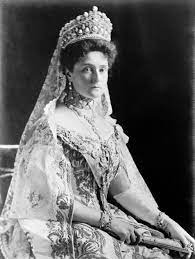
Eps 105: Biography Of Tsarina Alexandra Feodorovna Of Russia
— History
Tsarina Alexandra Feodorovna of Russia, born Princess Alix of Hesse, was the wife of Tsar Nicholas II and the last Empress of Russia. Known for her beauty and strong Christian faith, she married Nicholas in 1894, adopting the Russian Orthodox faith and the name Alexandra Feodorovna. Despite her initial unpopularity in Russia, especially due to her German heritage, she remained a devoted wife and mother to her five children. Her close relationship with the mystic Rasputin, whom she believed could heal her hemophiliac son Alexei, further fueled public and political dissent. Struggling with court politics and her husband's ineffective leadership during World War I, Alexandra's influence over Nicholas grew, but it alienated her from both the public and the government. As revolutionary fervor grew, the royal family was placed under house arrest during the February Revolution of 1917, and Alexandra shared her husband's fate after he abdicated. In 1918, they were executed by the Bolsheviks in Yekaterinburg. Alexandra's legacy remains complex, marked by intense loyalty to her family and the tragic end of the Romanov dynasty.
| Seed data: | Link 1 |
|---|---|
| Host image: | StyleGAN neural net |
| Content creation: | GPT-3.5, |
Host

Lucas Porter
Podcast Content
Her reign as Tsarina was marked by increasing public distrust, partly due to her reliance on the mystic Rasputin to treat her hemophilic son, Tsarevich Alexei. Rasputin's influence and his controversial presence at court only deepened the already widespread public discontent, leading many to blame Alexandra for the empire's misfortunes. Her attempts to support and advise Nicholas often resulted in politically detrimental advice, which further complicated her reputation. Throughout her life, Alexandra was deeply religious and leaned heavily on her faith, channeling her personal sufferings into a belief that she was destined to endure hardships for a greater cause.
Despite her genuine efforts to bolster her husband's reign, Alexandra's inability to connect with the Russian populace and her perceived meddling in governmental affairs contributed to the downfall of the Romanov dynasty. The Russian Revolution of 1917 led to the abdication of Nicholas II and the eventual arrest and execution of Alexandra, Nicholas, and their children in 1918. Her life stands as a poignant example of how personal convictions and political naivety can intertwine, often with devastating national consequences. Alexandra’s journey from a German duchess to the last Tsarina of Russia encapsulates a life of duty, love, and profound tragedy, leaving a legacy that continues to fascinate and haunt historians to this day.