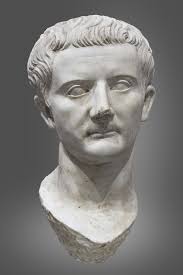
Eps 128: Biography Of Roman Emperor Tiberuis
— History
Tiberius, born in 42 BCE, was the second Roman Emperor, succeeding Augustus. Initially a capable military leader, he expanded the empire's boundaries in the north. His reign, beginning in 14 CE, was marked by administrative efficiency but also growing paranoia and political purges. Tiberius retreated to Capri in 26 CE, leaving the administration to Sejanus, whose ambition led to a brutal crackdown on perceived enemies. Following Sejanus's execution in 31 CE, Tiberius became increasingly tyrannical. He died in 37 CE, succeeded by his grand-nephew Caligula. Tiberius's legacy is mixed, combining effective governance with notable cruelty and mistrust.
| Seed data: | Link 1 |
|---|---|
| Host image: | StyleGAN neural net |
| Content creation: | GPT-3.5, |
Host

Carla Fisher
Podcast Content
Upon Augustus' death in 14 CE, Tiberius became the second emperor of Rome, a role he was reluctant to accept. His reign was initially successful, marked by political stability and consolidation of the empire’s finances. However, Tiberius’ deep-seated mistrust and preference for seclusion began to surface. This period saw the rise of Sejanus, Tiberius’ ambitious Praetorian Prefect, whose machinations nearly led to a coup. Retreating to the island of Capri in 26 CE, Tiberius let Sejanus control much of Rome's administration until his downfall and execution for treason in 31 CE.
Tiberius’ later years were shrouded in allegations of paranoia, cruelty, and debauchery, largely fed by hostile sources like Tacitus and Suetonius. Nonetheless, he maintained a firm hand on the administration and left the treasury with significant reserves upon his death. Tiberius passed away in 37 CE, at the age of 77, and was succeeded by his grand-nephew and adopted grandson, Caligula. His legacy is one of a capable but deeply flawed leader whose complexities have been the subject of debate among historians, reflecting the perils and pressures of maintaining absolute power in ancient Rome.