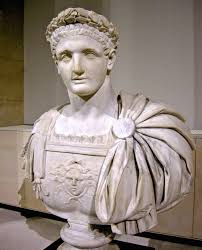
Eps 131: Biography Of Roman Emperor Domitian
— History
Domitian, born in 51 AD, was the younger son of Emperor Vespasian. His rule as Roman Emperor from 81 to 96 AD followed the reign of his brother Titus. Known for his autocratic style, Domitian strengthened the economy by revaluing the Roman coinage, expanded the border defenses, and initiated significant building projects in Rome. His reign was marked by relative peace and stability, though it was also characterized by increasing autocracy, extensive use of propaganda, and the persecution of political opponents. He assumed titles such as "Lord and God" (Dominus et Deus). Despite his effective administration, his harsh rule led to distrust and alienation among the Senate and the aristocracy. Domitian was assassinated in 96 AD in a conspiracy involving court officials, after which the Senate condemned his memory to "damnatio memoriae," erasing his legacy from public monuments and records.
| Seed data: | Link 1 |
|---|---|
| Host image: | StyleGAN neural net |
| Content creation: | GPT-3.5, |
Host

Byron Dunn
Podcast Content
Domitian's reign, spanning 15 years until 96 AD, was marked by efforts to strengthen the economy, fortify the empire's defenses, and embark on ambitious building projects. He revalued the Roman currency, reconstructed numerous buildings that had deteriorated during previous tumultuous periods, and revived Rome's moral legislation. His military campaigns were a mix of successes and failures; he effectively protected the empire’s borders, especially along the Danube and in Britain, but struggled with uprisings such as the Dacian Wars.
Domitian's autocratic style engendered considerable fear and resentment among the Roman Senate and elite. His penchant for deeming himself a living god and demanding to be addressed as "Dominus et Deus" (Master and God) made him unpopular among the traditional ruling classes accustomed to a more collaborative form of governance. Throughout his rule, accusations of treason and conspiracies were rampant, often leading to purges and executions that stained his reign with blood. This atmosphere of paranoia culminated in Domitian's assassination on September 18, 96 AD, orchestrated by court officials including his own chamberlain and steward.
Despite his controversial rule, Domitian left an indelible mark on Roman history. Under his administration, Rome saw significant infrastructure improvements, including the completion of the Colosseum, which had begun under his father Vespasian, and the construction of the Arch of Titus. His legacy, however, was tainted by his tyrannical approach, leading subsequent emperors to avoid emulating his rigid methods of control. The Roman Senate, who sought to erase his memory through damnatio memoriae, officially condemned his legacy, but the nuanced view of history acknowledges both his administrative efficiencies and his despotic tendencies. Domitian remains a complex figure whose reign exemplified the dichotomy of effective governance overshadowed by brutal autocracy.