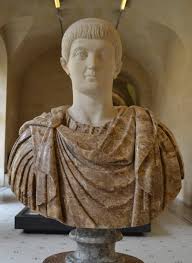
Eps 134: Biography Of Roman Emperor Constans
— History
Constans, also known as Flavius Julius Constans Augustus, was a Roman Emperor who ruled from 337 to 350 AD. He was the third and youngest son of Constantine the Great and Fausta. Initially, Constans was given control over Italy, Africa, and Illyricum following the death of his father. His rule was marked by various military campaigns, including conflicts with the Franks and the Picts, which helped secure the northern and western frontiers of the empire. Constans is also noted for his role in the early Christian Church, supporting the Nicene Creed against Arianism. His reign, however, faced internal challenges and eventually led to his downfall. In 350 AD, Constans was overthrown and murdered in a coup led by the usurper Magnentius. Despite his short reign, Constans played a significant role in maintaining the unity and stability of the Roman Empire during a turbulent period.
| Seed data: | Link 1 |
|---|---|
| Host image: | StyleGAN neural net |
| Content creation: | GPT-3.5, |
Host

Crystal Barnes
Podcast Content
Constans' rule, however, was far from peaceful. He faced continuous threats both from external enemies and from within his own empire. The pressures of defending the borders against Germanic tribes, combined with internal dissent, kept his reign in a constant state of turmoil. Despite these challenges, he was noted for his staunch Christianity, exerting influence over church policies, and suppressing pagan practices. His dedication to the Nicene Creed helped to solidify the foundation of orthodox Christianity during a time of significant theological debate. However, his religious fervor also alienated many, creating friction in regions where local customs and beliefs were different.
Constans' downfall came in 350 AD when he became the victim of a coup led by the usurper Magnentius. While in Gaul, Constans was betrayed by his own troops, and upon attempting to flee, he was captured and assassinated. His death signaled the end of the dynasty founded by Constantine the Great and plunged the Western Roman Empire into further chaos. Constans' brief but impactful reign left a legacy of both consolidation and conflict, highlighting the complexities of ruling an empire as vast and diverse as Rome. Despite his untimely death, his influence, particularly in religious affairs, would resonate for years to come, shaping the Christianization of the Roman Empire and laying the groundwork for the Middle Ages.