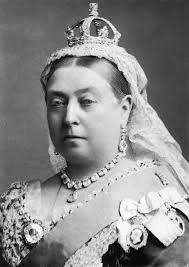
Eps 71: Biography Of Queen Victoria Of The United Kingdom
— history
Queen Victoria, born in 1819, ascended the British throne in 1837 and had an unprecedented reign of 63 years. The podcast highlights her significant influence on the era, known as the Victorian Age, marked by industrial, cultural, and scientific advancements. Crowned at just 18, she married Prince Albert, who significantly influenced her reign until his death in 1861. Victoria had nine children, whose marriages connected European royal families. Her leadership during periods of vast colonial expansion solidified Britain’s global position. Despite personal tragedies and challenges, including political tensions with several Prime Ministers, her resilient character and dedication left a lasting legacy on the monarchy and the British Empire's history.
| Seed data: | Link 1 |
|---|---|
| Host image: | StyleGAN neural net |
| Content creation: | GPT-3.5, |
Host

Angel Sims
Podcast Content
Victoria married her first cousin, Prince Albert of Saxe-Coburg and Gotha, in 1840, and together they had nine children who married into various European royal families, earning Victoria the nickname "the grandmother of Europe." Her marriage to Prince Albert was a happy one, albeit marked by his untimely death in 1861, which left her in deep mourning for much of her remaining life. Victoria's personal preference for a more regal and less political role in governance allowed the British parliamentary system to evolve more into its modern form, with increasing power and responsibility vested in elected officials.
Despite her seclusion after Albert's death, Queen Victoria continued to engage in state affairs and performed her ceremonial duties. Her influence stretched beyond the United Kingdom to include India, which was formally declared a part of the British Empire in 1876 with Victoria being named Empress of India. Under her rule, the United Kingdom became the world's foremost global power, driven by its unparalleled economic strength and expansive colonial holdings. Queen Victoria herself became an enduring symbol of the era's values, which emphasized duty, family, and personal morality. She passed away peacefully at the age of 81 on the Isle of Wight, bringing to an end an era that had profoundly shaped the modern world. Her legacy lived on through her descendants and the profound changes her reign fostered in British society and the global order.