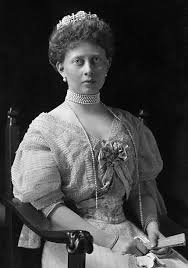
Eps 94: Biography Of Princess Margaret Of Prussia And Queen Consort-Elect Of Finland
— History
Princess Margaret of Prussia was born in 1872 to the German Emperor Frederick III and Empress Victoria, making her granddaughter to Queen Victoria of the United Kingdom. Known for her intelligence and charm, she played a significant role in European aristocracy. In 1893, she married Prince Frederick Charles of Hesse, and the couple had six children. During World War I, her husband was elected King of Finland by the Finnish Parliament in 1918, designating her as the Queen Consort-Elect. However, they never ascended to the throne due to political changes and Finland's subsequent decision to become a republic. Princess Margaret is remembered for her dedication to her family and her cultural contributions, living a relatively quiet life until her death in 1954.
| Seed data: | Link 1 |
|---|---|
| Host image: | StyleGAN neural net |
| Content creation: | GPT-3.5, |
Host

Hugh Kuhn
Podcast Content
Margaret's life took a significant turn when she married Prince Friedrich Karl of Hesse in January 1893. The union was more than a joining of hearts, as it cemented political connections between powerful royal families. Friedrich Karl was a capable and suitable match, known for his military career and noble standing in Europe. Together, they had a substantial family, blessed with six children, who carried forward the legacies of their illustrious ancestry.
Her path was forever changed during the upheavals of World War I. With the political landscape of Europe dramatically shifting, in 1918, Finland, newly independent from Russia, sought a monarch to symbolize national unity and stability. As a result, the Finnish Parliament offered Friedrich Karl the throne, making Margaret the Queen Consort-elect of Finland. Though initially ready to embrace this new role, geopolitical realities intervened. The German defeat in the war and the subsequent abdication of the German monarchies led Friedrich Karl to renounce the throne of Finland before he could be officially crowned, thus altering their destinies once again.
Despite this setback, Princess Margaret continued to embody the virtues of her regal heritage. She remained a steadfast figure within the complex web of European aristocracy, navigating a life marked by great historical upheavals and personal transformations. Her later years were dedicated to her family and charitable causes, preserving the dignity befitting her royal lineage. Margaret passed away on January 22, 1954, leaving behind a legacy that intertwined with the fortunes of many European nations and royal houses. Her life stands as a testament to the ever-evolving nature of royalty in the 20th century.