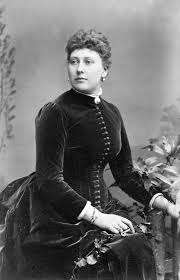
Eps 72: Biography Of Princess Beatrice Of The United Kingdom (1857-1944)
— History
Princess Beatrice of the United Kingdom, born in 1857, was the youngest daughter of Queen Victoria and Prince Albert. Her early life was heavily influenced by her mother's strict upbringing and the deaths of her father and other family members. Beatrice was particularly close to her mother, acting as her personal secretary for many years. Despite Queen Victoria's initial opposition to her daughter marrying, Beatrice eventually wed Prince Henry of Battenberg with the queen's reluctant approval. The couple had four children before Henry's untimely death in 1896. Beatrice continued to serve her mother loyally and later dedicated herself to preserving Queen Victoria's legacy by editing and publishing her journals. She also took on public duties and supported various charitable causes throughout her life. Beatrice passed away in 1944, leaving behind a lasting impact on the royal family and historical records.
| Seed data: | Link 1 |
|---|---|
| Host image: | StyleGAN neural net |
| Content creation: | GPT-3.5, |
Host

Beth Cunningham
Podcast Content
As a young woman, Beatrice’s personal aspirations were largely shaped by her mother's expectations. She abided by Queen Victoria's wishes to remain by her side, effectively delaying any prospects of marriage. Nevertheless, Beatrice fell in love with Prince Henry of Battenberg, and the Queen eventually consented to their union on the condition that they live with her. Beatrice and Henry married on July 23, 1885, in a ceremony befitting their royal stature. Their partnership was marked by mutual respect and affection, producing four children: Alexander, Victoria Eugenie (Ena), Leopold, and Maurice.
Throughout her life, Princess Beatrice maintained a delicate balance between family duties and royal responsibilities. She was actively involved in various charitable activities, reflecting her compassionate and dutiful nature. Her life took a tragic turn when Prince Henry died of malaria in 1896 while serving in Africa, leaving Beatrice devastated but resilient. She continued to uphold her responsibilities, dedicating herself to her children and her ailing mother, Queen Victoria, until the latter’s death in 1901.
In the years following Queen Victoria's demise, Beatrice focused her energies on preserving her mother's legacy. She edited and published Queen Victoria's voluminous journals, a task that required meticulous care and loyalty to her mother's memory. Despite her own advanced age, Beatrice remained active in public life, fulfilling her royal obligations with a sense of duty instilled in her from a young age. She also maintained close relationships with her extended family, especially with her niece, Queen Victoria Eugenie of Spain, demonstrating her enduring influence within European royalty.
Princess Beatrice lived through significant transformations within the British Empire, witnessing both world wars and the social upheavals that accompanied them. Her resilience and adaptability were emblematic of the steadfastness expected of royalty. On October 26, 1944, Princess Beatrice passed away at the age of 87, marking the end of an era. Her life story is a testament to the enduring strength of familial bonds, loyalty, and the quiet power of duty. Princess Beatrice may not be as well-known as some of her siblings, but her contributions to her family and her country remain a significant part of British history.