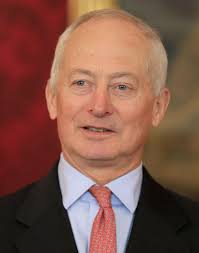
Eps 142: Biography Of Prince Hans-Adam The Second Of Liechtenstein
— History
Prince Hans-Adam II of Liechtenstein, born on February 14, 1945, is the reigning monarch of the principality. He ascended to the throne on November 13, 1989, following his father, Prince Franz Joseph II. Educated in economics and business administration in Switzerland and England, Hans-Adam has significantly influenced Liechtenstein's economic and political landscape. Under his leadership, the country has maintained its status as a global financial hub due to progressive economic policies. Hans-Adam is known for his interest in direct democracy and has authored books discussing its merits. In 2004, he transferred most of his royal duties to his son, Alois, while retaining the title of reigning prince. His efforts in promoting transparency and modernization within the governing framework have strengthened Liechtenstein's international standing. Despite his royal responsibilities, Hans-Adam has managed the family's extensive financial interests, ensuring the dynasty's and the country's economic stability.
| Seed data: | Link 1 |
|---|---|
| Host image: | StyleGAN neural net |
| Content creation: | GPT-3.5, |
Host

Jane Nelson
Podcast Content
An ardent supporter of direct democracy, Prince Hans-Adam II's reign has been marked by a pragmatic approach to governance. In 2003, he initiated a constitutional referendum which sought to extend his powers significantly; remarkably, the populace approved these changes, reflecting the trust and esteem he garnered among his people. With a deep commitment to education and culture, he has also been a generous patron of the arts, contributing significantly to the Liechtenstein Museum, which houses one of the most prestigious private art collections worldwide.
Beyond his responsibilities as a monarch, Prince Hans-Adam II is an accomplished author and scholar, with interests in political science, economics, and governance. His book, "The State in the Third Millennium," offers a forward-thinking discourse on the role of the state in contemporary society, revealing his philosophical and intellectual depth. Despite the grandeur surrounding his position, he is known for maintaining a relatively low personal profile, often preferring to focus on practical contributions than seeking the limelight.
In his personal life, Prince Hans-Adam II is a family man, married to Princess Marie, with whom he has four children: Hereditary Prince Alois, Prince Maximilian, Prince Constantin, and Princess Tatjana. His reign has also been marked by a deliberate effort to prepare the next generation, particularly Alois, who has taken on many of his father’s duties as regent since 2004. This smooth succession planning ensures the continuity and stability of Liechtenstein's leadership.
In summary, Prince Hans-Adam II's biography is a testament to steadfast leadership, economic foresight, and a deep commitment to his nation's prosperity and cultural wealth. His legacy is one that intertwines tradition with modernity, a guiding example for small states navigating the complexities of the modern world.