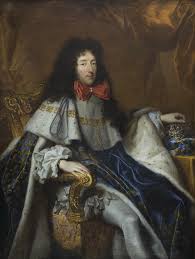
Eps 39: Biography Of Philippe The First Duke Of Orleans
— History
Philippe I, Duke of Orléans, was born on September 21, 1640, as the younger brother of King Louis XIV of France. Known affectionately within the family as "Monsieur," Philippe played a significant role in the French royal court. Despite being considered less significant than his brother in terms of political power, he was a notable military leader and patron of the arts. Philippe's personal life was marked by his open homosexuality, a rarity for a person of his standing during that era, and he had a complicated but enduring relationship with his two wives, Henrietta of England and Elizabeth Charlotte of the Palatinate, producing several offspring. His descendants played crucial roles in European history. Philippe's legacy also includes his contributions to the opulence and cultural richness of the French court, serving as a counterbalance to his brother's reign.
| Seed data: | Link 1 |
|---|---|
| Host image: | StyleGAN neural net |
| Content creation: | GPT-3.5, |
Host

Daisy Shelton
Podcast Content
Philippe’s early life was marked by his mother, Anne of Austria, who deeply influenced both him and his brother. Philippe’s father, Louis XIII, died when he was only three years old, leaving the young prince under the regency of his mother and the guidance of Cardinal Mazarin. Throughout his childhood and adolescence, Philippe exhibited a flair for fashion and the arts, often involving himself in the cultural life of the court, a stark contrast to Louis XIV’s martial pursuits.
As an adult, Philippe’s marriage alliances were orchestrated to strengthen the political landscape of France. His first marriage to Henrietta of England, daughter of Charles I, was emblematic of his life as a pawn in the grand chessboard of European politics. While ostensibly driven by duty, their relationship was complex, encompassing affection, rivalry, and manipulation. Henrietta's death in 1670 under mysterious circumstances further complicated Philippe's life. He subsequently married Elizabeth Charlotte of the Palatinate, also known as Liselotte, who bore him children and brought a candid and pragmatic influence to his personal life.
Militarily, Philippe proved himself to be a competent commander. He led the French forces with distinction during key campaigns, most notably at the Battle of Cassel in 1677 where he secured a victory against William of Orange. Despite his achievements, Louis XIV was often wary of his brother’s growing popularity and military successes, fearing any potential challenge to his own supremacy. For this reason, Philippe was often sidelined from further military endeavors, a testament to the king’s desire to maintain a tight grip on power.
In his later years, Philippe focused much of his energy on the development and beautification of the Palais-Royal in Paris, which became a vibrant cultural hub under his patronage. He was a prominent figure in the arts, supporting playwrights, musicians, and architects, and establishing a court that rivaled his brother’s in opulence and cultural significance.
Philippe I, Duke of Orleans, died on June 9, 1701. His life was a complex tapestry of loyalty and rivalry, personal and political intrigue, military prowess and cultural patronage. He navigated the treacherous waters of French absolutism with grace and a measure of strategic acumen, securing his legacy not only as the brother of a king but as a pivotal figure in his own right within the grand narrative of 17th-century French history. His descendants went on to play crucial roles in French and European affairs, cementing the lasting impact of the House of Orleans.