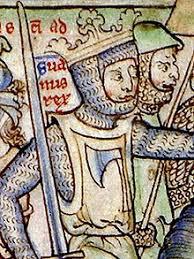
Eps 12: Biography Of King Sweyn Forkbeard Of Denmark
— history
King Sweyn Forkbeard of Denmark, born around 960 AD, was the son of King Harald Bluetooth. He initially rebelled against his father, eventually forcing him into exile and taking the throne himself. Sweyn expanded his rule, conquering parts of Norway and engaging in frequent raids in England. In 1013, he successfully invaded England and declared himself king, briefly ruling until his sudden death in 1014. His legacy includes his son, Cnut the Great, who continued his ambitions by establishing a North Sea empire that included Denmark, England, and Norway. Sweyn Forkbeard is remembered for his military prowess and significant impact on medieval Scandinavia and England.
| Seed data: | Link 1 |
|---|---|
| Host image: | StyleGAN neural net |
| Content creation: | GPT-3.5, |
Host

Lily Woods
Podcast Content
Sweyn’s initial invasions were part of a larger series of Viking incursions, characterized by their brutality and strategic acumen. The Danish fleet would ravage the English coastlines, extracting Danegeld, a form of tribute paid to prevent further attacks. Sweyn’s raids were so relentless that they earned him a formidable reputation across Europe. His determination to seize the English crown was driven partly by his resentment towards Æthelred, who had orchestrated the St. Brice’s Day massacre in 1002, during which the Danish settlers in England were ruthlessly slaughtered under the king’s orders.
After nearly a decade of increasingly aggressive campaigns, Sweyn achieved his goal in 1013, forcing Æthelred into exile in Normandy. Sweyn’s rule over England was brief but significant, demonstrating his power and the shifting dynamics of medieval geopolitics. Unfortunately, Sweyn died suddenly in 1014, and his death left a power vacuum that led to further contests over the English throne, involving his sons Harald II and Cnut the Great. Cnut eventually established a North Sea Empire, integrating Denmark, Norway, and England.
King Sweyn’s legacy is multifaceted; he was a warrior-king who epitomized the Viking era's adventurous spirit and military prowess. His conquest of England marked a pivotal moment in the history of both nations, setting the stage for subsequent Danish influence in the British Isles. Sweyn Forkbeard’s life reflects the turbulent and transformative nature of early medieval Europe, where personal ambition and martial strength could reshape the political landscape in profound and lasting ways. His deeds are etched into the annals of history, embodying the era's complexity and the relentless drive of those who sought to carve out their dominions in the face of relentless challenges.