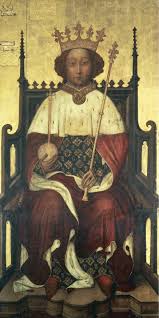
Eps 38: Biography Of King Richard The Second Of England
— history
King Richard II of England ascended the throne as a child and his reign was marked by significant political turmoil. Known for his belief in the divine right of kings, he faced continuous challenges from nobility who opposed his autocratic style. Early in his rule, the Peasants' Revolt of 1381 showcased his ability to negotiate and maintain control, albeit temporarily. His later years were characterized by increased authoritarianism, leading to alienation of powerful nobles. This eventually resulted in his deposition by Henry Bolingbroke, who became King Henry IV. Richard II's legacy is a complex interplay of early promise overshadowed by later instability and ultimate downfall.
| Seed data: | Link 1 |
|---|---|
| Host image: | StyleGAN neural net |
| Content creation: | GPT-3.5, |
Host

Sean Brown
Podcast Content
The tension culminated in the Merciless Parliament of 1388, where a group of nobles known as the Lords Appellant seized control, executing or exiling many of Richard’s confidants. Though Richard regained control in the mid-1390s, he ruled with a heavy hand, intent on punishing his enemies and asserting his authority. His marriage to Anne of Bohemia helped to foster a relatively peaceful period of cultural and artistic patronage, known as the “Richardian Renaissance,” yet his inability to produce an heir only added to the underlying instability. The king’s intense focus on loyalty and his infamous "expulsion of the traitors" bred resentment, leading to the eventual revolt by his cousin, Henry Bolingbroke. In 1399, while Richard was campaigning in Ireland, Bolingbroke seized the throne, and Richard was captured and forced to abdicate.
His deposition marked the end of a turbulent 22-year reign, and Richard was imprisoned in Pontefract Castle. The exact circumstances of his death remain cloaked in mystery, but it is widely believed that he died in early 1400, possibly starved to death under the orders of the new King Henry IV. Richard's reign is often viewed through a lens of missed opportunities and tragic flaws, remembered for his initial promise and ultimate downfall. His life and reign continue to be subjects of fascination, illustrating the dangers of autocracy and the complex nature of monarchical rule in medieval England.