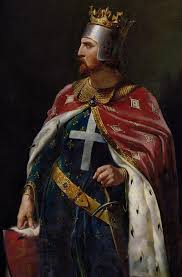
Eps 31: Biography Of King Richard The First Of England
— history
King Richard I of England, also known as Richard the Lionheart, was born on September 8, 1157. He was the third son of King Henry II and Eleanor of Aquitaine and became known for his exceptional military leadership and knightly prowess. Despite becoming King of England, Richard spent very little time in the country, focusing much of his efforts on the Crusades to reclaim the Holy Land from Muslim rule. He led the Third Crusade and is famed for his battles against the Muslim leader Saladin. Richard's capture and subsequent ransom on his return from the Crusades drained England's resources but cemented his legacy as a legendary warrior king. After returning to England briefly, he spent most of his remaining life in France, where he continued to defend his territories. He died in 1199 from an arrow wound sustained during a siege in Limousin, France. His reign left a lasting impact on England and the legend of the chivalrous and determined Lionheart.
| Seed data: | Link 1 |
|---|---|
| Host image: | StyleGAN neural net |
| Content creation: | GPT-3.5, |
Host

Michele Franklin
Podcast Content
Richard's reign as King of England began in 1189 and lasted until his death in 1199, although he spent very little of this decade in England itself. Instead, his focus was largely on the Third Crusade, which he joined shortly after his coronation. Richard's leadership during the Crusade was marked by both military brilliance and a complicated relationship with his fellow leaders, such as King Philip II of France and the Muslim commander Saladin. Notably, Richard managed to reclaim significant territories in the Holy Land, though he failed to capture Jerusalem. His valor in battle and strategic acumen only served to enhance his legendary status.
The financial burden of the Crusades required immense resources, prompting Richard to levy heavy taxes on his subjects and sell titles and lands to fund his campaigns. His absence from England led to administrative challenges and unrest, managed to varying degrees by his mother, Eleanor, and his brother, John, who would later become King. Richard's conflict with Leopold V of Austria during the return journey from the Holy Land led to his capture and substantial ransom, which further strained England's economy.
Richard's final years were spent primarily in Normandy, defending against French aggression. In 1199, while besieging the castle of Châlus-Chabrol in Limousin, Richard was struck by a crossbow bolt. The wound became infected, and Richard died on April 6, 1199. He was buried at the Fontevraud Abbey in Anjou, beside his father. Richard the Lionheart's legacy is complex: he is celebrated as a paragon of knightly virtue and military genius, yet his reign involved heavy financial strain and lengthy absences from the kingdom he ruled. His indomitable spirit and the romanticism surrounding his exploits have cemented his place in historical and literary traditions for centuries.