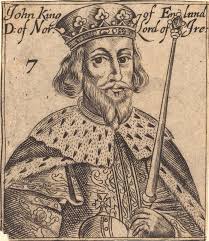
Eps 32: Biography Of King John Of England
— history
King John of England, also known as John Lackland, was born in 1166 as the youngest son of King Henry II and Eleanor of Aquitaine. He ascended to the throne in 1199 following the death of his brother, King Richard the Lionheart. His reign was marked by several controversial events, including conflicts with his barons, disputes with the Church, and territorial losses in France. Notably, he lost significant lands in Normandy after a defeat by King Philip II of France. His rule faced increasing resistance from English nobles, leading to the sealing of the Magna Carta in 1215, a document that limited royal power and is considered a foundational moment in constitutional governance. John's reign ended with his death in 1216, leaving a mixed legacy of both administrative reforms and political instability.
| Seed data: | Link 1 |
|---|---|
| Host image: | StyleGAN neural net |
| Content creation: | GPT-3.5, |
Host

Camila Arnold
Podcast Content
Internally, John's reign was marked by administrative reforms but also by heavy taxation and numerous conflicts with the nobility, which culminated in the sealing of the Magna Carta in 1215. This historic document aimed to limit royal power and safeguard baronial rights, laying the groundwork for modern parliamentary democracy. However, John’s disagreements with the Church, including a protracted dispute with Pope Innocent III, led to his excommunication and further strained his reign.
Despite efforts to rule with an iron fist, John’s inability to maintain control and the resulting dissatisfaction among his subjects painted his legacy in a somber light. Following his death on October 19, 1216, John's nine-year-old son, Henry III, succeeded him, opening a new chapter in English history. King John's tumultuous rule, marked by failures and forced concessions, serves as a pivotal point in the evolution of English governance and law.