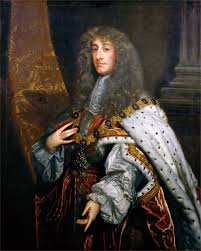
Eps 61: Biography Of King James The Second Of England And Seventh Of Scotland
— history
King James II of England and VII of Scotland reigned during a tumultuous period marked by religious conflicts and political upheaval. Born in 1633, James was the younger brother of Charles II and son of Charles I, who was executed during the English Civil War. Although initially a Protestant, James converted to Catholicism, which heightened tensions in a predominantly Protestant England. His reign began in 1685, but his overt Catholic policies and attempts to promote religious tolerance for Catholics and Protestant Dissenters antagonized both the Anglican establishment and political elite. This led to widespread unrest, culminating in the Glorious Revolution of 1688. James was deposed and replaced by his Protestant daughter Mary II and her husband, William III of Orange. James spent his remaining years in exile in France, supported by his cousin, Louis XIV, until his death in 1701. His reign left a legacy of religious division and the establishment of a constitutional monarchy in England.
| Seed data: | Link 1 |
|---|---|
| Host image: | StyleGAN neural net |
| Content creation: | GPT-3.5, |
Host

Terrance Vargas
Podcast Content
Despite his Catholic faith, James held significant roles within the government, including that of the Lord High Admiral, further solidifying his place in the line of succession. In 1685, he ascended to the throne following Charles II’s death, becoming King James II of England and VII of Scotland. His reign was marked by attempts to promote religious tolerance for Catholics, issuing the Declaration of Indulgence in 1687, which aimed to suspend laws penalizing Catholics and Protestant dissenters. Such policies, however, fueled fears of a reestablishment of Catholic dominance and absolute monarchy, leading to mounting opposition from the largely Protestant English Parliament and populace.
James’s attempts to centralize power and extend religious freedom culminated in what is known as the Glorious Revolution. In 1688, alarmed by the birth of James's Catholic heir, influential parliamentarians invited William of Orange, a Protestant, and James's son-in-law, to invade England. Deserted by his army and advisors, James fled to France, marking the end of his reign. William and Mary, James's Protestant daughter, assumed the throne, and James spent his remaining years in exile, supported by his cousin, Louis XIV.
King James II’s legacy is a complicated tapestry of religious confrontations and political strife, signifying the waning power of absolute monarchy in England and the irreversible shift towards a constitutional balance. His life, marked by fervent religious conviction and contentious political decisions, continues to evoke debate among historians about the nature of governance, faith, and the enduring battle for power in a rapidly modernizing world.