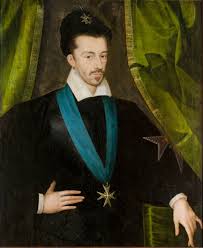
Eps 25: Biography Of King Henry The Third Of France
— History
King Henry III of France was a complex and multifaceted monarch who ruled during a tumultuous period in French history. Born in 1551, he ascended to the throne in 1574 after the death of his brother, King Charles IX. Henry III was originally the Duke of Anjou and had also been elected King of Poland, a position he abandoned to become the King of France. His reign was marked by the religious conflicts of the French Wars of Religion, primarily between Catholic and Protestant factions. Henry III was known for his attempts to mediate between these factions, though his efforts were often met with limited success. His reign saw significant political instability and was characterized by shifting alliances and power struggles. He established the Catholic Holy League to counter Protestant forces but faced opposition from within his own ranks. Additionally, his personal life and rumored relationships with men, often referred to as his "mignons," attracted scandal and controversy. Despite his efforts to maintain a balanced rule, Henry III's tenure was beleaguered by assassinations and plots against his life. In 1589, he was assassinated by a fanatical monk named Jacques Clément, plunging France into further chaos. Henry III's death without an heir led to the succession of Henry of Navarre, who would become Henry IV, marking the end of the Valois dynasty and the beginning of the Bourbon dynasty in France.
| Seed data: | Link 1 |
|---|---|
| Host image: | StyleGAN neural net |
| Content creation: | GPT-3.5, |
Host

Troy Kennedy
Podcast Content
His reign was immediately besieged by the religious wars between Catholics and Huguenots, also known as the French Wars of Religion. Henry III's attempts to quell the conflict through diplomacy, such as the Peace of Monsieur in 1576, met with limited success and only temporary relief. He was a devout Catholic, yet his progressive stances and flamboyant personality often placed him at odds with the conservative elements of French society. His establishment of the "Order of the Holy Spirit" in 1578 was an effort to unite the kingdom under a singular chivalric order but did little to stem the tide of factionalism.
Internally, Henry's court was rife with intrigue and scandal, as his preference for male courtiers, known colloquially as the "mignons," stirred controversy and fed rumors that detracted from his perceived legitimacy. This, coupled with his heavy taxation policies and centralization efforts, alienated many noble factions and contributed to several uprisings. In 1584, the death of his younger brother and heir presumptive, Francis, Duke of Anjou, further complicated his reign, creating a succession crisis as Henry III had no children. The Catholic League, led by the ambitious Henry, Duke of Guise, capitalized on this instability, intensifying the civil strife.
Henry III's final years were marked by his increasingly desperate attempts to maintain control over his fracturing kingdom. The Day of the Barricades in 1588, where the Duke of Guise's forces took control of Paris, forced Henry to flee the capital. Realizing he could no longer tolerate the threat posed by the Duke, Henry orchestrated Guise's assassination later that year, an act that further ignited the ire of the Catholic faction. Deemed a tyrant by his enemies, Henry III found an unlikely ally in his Protestant cousin, Henry of Navarre, in a bid to reclaim his authority.
Ultimately, Henry III's life came to a tragic end on August 1, 1589, when he was assassinated by a fanatical Dominican friar named Jacques Clément. His death marked the conclusion of the Valois dynasty and the rise of the Bourbon line with Henry of Navarre, who would become the celebrated Henry IV. Henry III's legacy is one of both turmoil and transformation, a monarch who struggled valiantly, though often unsuccessfully, to bring peace to a deeply divided kingdom. His reign encapsulates the complexities of power, faith, and identity in a time where the very fabric of France was being violently reshaped.