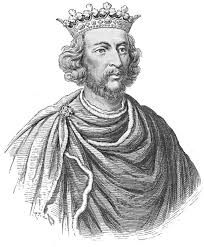
Eps 34: Biography Of King Henry The Third Of England
— history
King Henry III of England ascended to the throne as a young boy in 1216, following the death of his father, King John. His long reign, which lasted until 1272, was marked by efforts to consolidate royal power, conflict with powerful barons, and attempts to recover territories lost during his father’s reign. Henry’s reign saw the establishment of the Provisions of Oxford in 1258, which aimed to reform the governance by increasing the powers of the baronial council. However, tensions led to the Second Barons' War, which concluded with the Battle of Evesham in 1265, restoring Henry’s authority. Despite his dedication to building projects, such as the expansion of Westminster Abbey, his reliance on foreign advisors and heavy taxation strained relationships with his subjects. Henry's reign laid the groundwork for parliamentary government in England, though his efforts to lead effectively were hampered by internal strife and external pressures.
| Seed data: | Link 1 |
|---|---|
| Host image: | StyleGAN neural net |
| Content creation: | GPT-3.5, |
Host

Gertrude Boyd
Podcast Content
Henry III's personal rule, which began in earnest in 1234, was characterized by his deep piety and dedication to the church. His devotion is vividly encapsulated in his grand project of rebuilding Westminster Abbey in the Gothic style, a testament to his faith and an effort to solidify his legacy. However, his reign was not without challenges. The king’s preference for foreign advisors and his financial mismanagement often strained his relationship with the English barons, leading to significant conflicts that mirrored the disputes of his father's tenure.
The most notable of these confrontations was the Second Barons' War, led by Simon de Montfort in the mid-1260s. This rebellion marked a pivotal moment in English history as it temporarily resulted in a form of parliamentary rule, ultimately influencing the development of the English parliamentary system. Henry was captured in the Battle of Lewes in 1264, and his government was taken over by Montfort. However, royalist forces eventually triumphed at the Battle of Evesham in 1265, restoring Henry’s control under the auspices of his son, the future Edward I, who played a crucial role in defeating Montfort’s forces.
Despite the turbulence, Henry III’s reign saw the foundations laid for significant legal and administrative reforms. His issuance of the Provisions of Oxford in 1258, though initially forced upon him, marked a step toward constitutional monarchy by establishing a system of regular parliaments and checks on royal power. These provisions, along with the evolving common law, paved the way for more structured governance in England.
Henry's legacy is a complex tapestry of devotion and conflict. His reign, though often overshadowed by the more dynamic rules of his predecessors and successors, left an indelible mark on the English monarchy and the structure of English law and government. When Henry III died on November 16, 1272, he was succeeded by his son Edward I, a monarch whose reign would see the further consolidation of the realm and continued development of the institutions that began taking shape during Henry's long and eventful tenure.