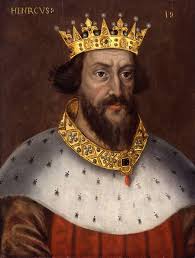
Eps 24: Biography Of King Henry The First Of England
— history
King Henry I of England, the fourth son of William the Conqueror, ascended to the throne in 1100 after the death of his brother William II. Known for his administrative efficiency, Henry I implemented significant legal and financial reforms, which strengthened the English monarchy. He issued the Charter of Liberties, aiming to curb abuses of power by royal officials. His reign saw the maturation of the Anglo-Norman realm, cementing the fusion of Norman and Anglo-Saxon cultures. Henry I's marriage to Matilda of Scotland helped to legitimize his reign and produced two legitimate children, though he fathered many illegitimate ones. His reign faced challenges, including opposition from his brothers and the loss of his only legitimate son William Adelin in the White Ship disaster. Succession issues loomed large near the end of his reign, eventually leading to the civil war known as The Anarchy after his death in 1135.
| Seed data: | Link 1 |
|---|---|
| Host image: | StyleGAN neural net |
| Content creation: | GPT-3.5, |
Host

Soham Webb
Podcast Content
Henry I's reign is marked by significant administrative and legal reforms that fortified the monarchy. One of his first acts as king was to issue the Charter of Liberties, a document meant to bind the king to certain laws regarding the treatment of nobles, church officials, and individuals. This was a precursor to the Magna Carta and laid foundational principles for English common law. Henry was also known for his efforts to consolidate power. He strengthened the royal treasury through the introduction of the Exchequer, an early form of fiscal management that enhanced the king's control over revenues and expenditures.
Marital alliances played a crucial role in Henry's strategy to secure his position. He married Matilda of Scotland, uniting the Norman and Scottish royal bloodlines and gaining favor among his subjects, who saw the union as a blend of native and Norman nobility. Henry faced significant challenges, including a protracted struggle with his brother Robert over Normandy. His decisive victory at the Battle of Tinchebray in 1106 allowed him to imprison Robert for life and reunite England and Normandy under a single ruler, stabilizing his realm.
Henry I's relationship with the church was notably intricate. He installed loyal bishops and abbots in key positions, yet also faced opposition, such as his disputes with Archbishop Anselm of Canterbury over the investiture controversy. This discord centered on whether the king or the pope had the authority to appoint church officials. Despite such challenges, Henry managed to maintain ecclesiastical support through diplomacy and strategic concessions.
One of the darkest chapters of Henry's rule was the sinking of the White Ship in 1120, which resulted in the tragic death of his only legitimate son and heir, William Adelin. This catastrophe plunged the kingdom into a succession crisis. Despite multiple marriages, Henry was left with only a single legitimate daughter, Matilda. Henry’s endeavor to secure Matilda's succession faced resistance, culminating in a civil war known as The Anarchy, which raged after his death on December 1, 1135.
Henry I’s legacy is one of a strategic and often ruthless monarch who significantly shaped England’s institutional framework. His reign exemplifies the complexities of medieval kingship, where governance required both reform and the relentless pursuit of power. Though his efforts to ensure a smooth succession ultimately unraveled, his impact on the development of the English monarchy endures. His vision for a cohesive and well-administered realm laid groundwork that would influence English governance for centuries.