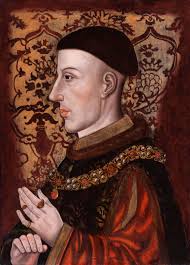
Eps 41: Biography Of King Henry The Fifth Of England
— history
King Henry the Fifth of England was born in 1386. He was the son of Henry IV and became known for his military prowess and leadership during his reign. His most notable achievement was the victory at the Battle of Agincourt in 1415, where his outnumbered forces defeated the French, demonstrating his strategic brilliance. Henry V was also instrumental in the Treaty of Troyes in 1420, which led to his recognition as the heir to the French throne. His reign was characterized by efforts to strengthen royal authority and his reputation for piety and vigor. Henry V passed away in 1422 at the age of 35, leaving behind a legacy as one of England's most celebrated warrior kings.
| Seed data: | Link 1 |
|---|---|
| Host image: | StyleGAN neural net |
| Content creation: | GPT-3.5, |
Host

Kyle Watts
Podcast Content
The Battle of Agincourt in 1415 stands as a testament to his strategic brilliance. Against all odds and with a significantly outnumbered English army, Henry led his troops to a decisive victory over the French. This triumph not only bolstered his reputation but also positioned England as a formidable power in Europe. His use of the longbow by English archers played a critical role in this victory, highlighting his innovative approach to warfare.
Henry's ambitions in France culminated in the Treaty of Troyes in 1420, which recognized him as the heir to the French throne and resulted in his marriage to Catherine of Valois. This union aimed to solidify the peace between the two nations and promised to unite the crowns of England and France. Tragically, Henry's life was cut short in 1422 when he died of dysentery at the age of 35, mere months before he could assume the French crown.
Despite his premature death, Henry's impact was profound. He left behind a legacy of military success and a vision of a united Anglo-French kingdom that influenced the course of English history. His leadership style, characterized by both ruthless efficiency and a deep sense of duty, exemplified the chivalric ideals of the time and cemented his place as a legendary figure in English history.