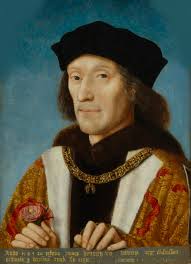
Eps 47: Biography Of King Henry The 7th Of England
— history
King Henry VII of England, founder of the Tudor dynasty, ascended to the throne after defeating Richard III at the Battle of Bosworth in 1485. His victory ended the Wars of the Roses, a series of civil wars for control of the English throne. Henry VII's reign brought stability and economic consolidation; he was known for his effective governance and efforts to strengthen the monarchy. He formed strategic marriages, including that of his son, Arthur, to Catherine of Aragon. Despite challenges, Henry established a strong fiscal policy and centralized government, ultimately paving the way for his son, Henry VIII. Henry VII died in 1509, leaving behind a more unified and prosperous England.
| Seed data: | Link 1 |
|---|---|
| Host image: | StyleGAN neural net |
| Content creation: | GPT-3.5, |
Host

Jane Nelson
Podcast Content
Upon ascending to the throne, Henry faced the arduous task of stabilizing a realm ravaged by decades of civil war. His marriage to Elizabeth of York, the daughter of Edward IV, symbolically united the warring houses of Lancaster and York, which helped to consolidate his power and establish political unity. Henry's administration was characterized by fiscal prudence and a focus on restoring royal authority. He bolstered the monarchy's financial position by implementing effective taxation and revenue-collection methods, famously utilizing bonds and recognizances to ensure loyalty among the nobility.
Henry VII's reign saw significant developments in foreign policy. By negotiating advantageous trade agreements and forging alliances through strategic marriages, such as the marriage of his son Arthur to Catherine of Aragon, he strengthened England's position in Europe. Domestically, he quelled several rebellions, most notably the Lambert Simnel and Perkin Warbeck uprisings, which threatened his rule but ultimately reinforced his authority once quashed.
Culturally, Henry VII's court became a center of Renaissance learning and art, setting the stage for the cultural flowering of his son's rule, Henry VIII. His legacy includes significant infrastructural developments, notably improvements to the navy, which laid the groundwork for England’s future maritime dominance. When Henry VII died on April 21, 1509, he left behind a more stable and prosperous kingdom, providing his successor with a solid foundation. His reign marked the transition from medieval to early modern England, ensuring the longevity of the Tudor dynasty.