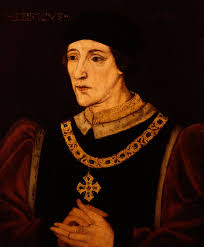
Eps 42: Biography Of King Henry The 6th Of England
— history
King Henry VI of England, born on December 6, 1421, ascended to the throne as an infant following his father Henry V's death. His reign was marked by the ongoing Hundred Years' War and internal strife, notably the Wars of the Roses between the Lancaster and York factions. Henry VI was known for his piety and weak leadership, which led to political instability. His bouts of mental illness further exacerbated the kingdom's troubles. Henry VI was briefly deposed by Edward IV but later restored before ultimately being captured and killed in 1471, ending the Lancastrian line's direct rule. His reign highlighted the complexities and turmoil of 15th-century England.
| Seed data: | Link 1 |
|---|---|
| Host image: | StyleGAN neural net |
| Content creation: | GPT-3.5, |
Host

Kyle Watts
Podcast Content
Henry VI was an ardent patron of education and religion; his establishment of Eton College and King’s College, Cambridge, are testaments to his commitment to piety and learning. Despite these positive contributions, his inability to control the nobility and his poor mental health were critical weaknesses. Henry experienced bouts of insanity, which necessitated the appointment of a protectorate led by Richard, Duke of York, heightening tensions among the English nobility.
The instability of Henry's reign led to the eruption of the Wars of the Roses, a dynastic struggle between the House of Lancaster (Henry’s faction) and the House of York. Henry’s reign, disrupted by these civil conflicts, saw him deposed twice; first in 1461 by Edward IV of the House of York and then briefly restored in 1470 before his final defeat in 1471. Tragically, Henry VI’s life ended under mysterious circumstances while imprisoned in the Tower of London in 1471, likely murdered to secure the throne for Edward IV.
King Henry VI’s reign is often remembered for its calamities and failures, overshadowed by the mental afflictions and political strife that plagued his time as monarch. His legacy, a mosaic of personal tragedy, institutional pioneering, and a kingdom in upheaval, casts a complex shadow over the history of England.