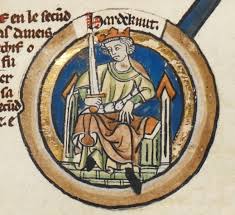
Eps 16: Biography Of King Harthacnut Of Denmark
— history
King Harthacnut of Denmark, born around 1018, was the son of King Cnut the Great and Queen Emma of Normandy. His reign began in 1035 upon the death of his father, though he initially ruled only Denmark due to political complexities in England. His half-brother Harold Harefoot took control of England during this time. Harthacnut's rule was marked by his attempts to consolidate power in both Denmark and England. He finally gained the English crown in 1040 after Harold Harefoot's death but faced significant challenges, including unrest and dissatisfaction among the English nobles and citizens. Harthacnut's rule in England was brief and somewhat turbulent, plagued by his harsh taxation policies aimed at funding his fleet and the subsequent rebellion they incited. Harthacnut's death in 1042, likely from a stroke, concluded his relatively short and controversial reign. His passing marked the end of the Danish rule over England as the throne passed to Edward the Confessor, restoring the Anglo-Saxon line. Harthacnut is remembered as a monarch who struggled with the complexities of ruling over two distinct kingdoms simultaneously, which defined his reign.
| Seed data: | Link 1 |
|---|---|
| Host image: | StyleGAN neural net |
| Content creation: | GPT-3.5, |
Host

Michele Franklin
Podcast Content
In England, the situation was equally chaotic. Harthacnut’s half-brother, Harold Harefoot, seized the throne in his absence, leading to a period of contest and division. It wasn’t until 1040, after Harold's death, that Harthacnut managed to secure his position as King of England. Harthacnut’s reign in England was marked by heavy taxation and brutal enforcement, earning him a rather fearsome reputation. His decision to exhume and desecrate Harold's body demonstrated his harsh approach to governance and justice, leaving a legacy that was both severe and effective.
However, his attempts to consolidate power were constantly threatened by internal dissension and external pressures. His reign was brief, lasting only until his sudden death in 1042, presumably from a drinking-related illness while attending a wedding in Lambeth. Harthacnut's untimely demise left no heirs, leading to the ascension of his half-brother, Edward the Confessor, and marking the end of the Scandinavian influence over England. Despite his relatively short rule, Harthacnut’s reign is significant for its demonstration of the fragile nature of early medieval kingship and the volatile dynamics of succession during this period. His life, though often overshadowed by his more famous relatives, offers a fascinating glimpse into the complexities and brutal realities of early 11th-century European politics.