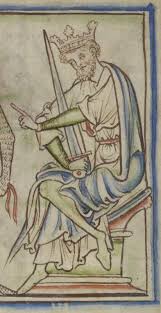
Eps 15: Biography Of King Harold Harefoot Of England
— history
King Harold Harefoot of England, also known as Harold I, was the son of Canute the Great and Aelgifu of Northampton. He ruled from 1035 to 1040 and earned the nickname "Harefoot" for his swiftness and hunting skills. Harold initially served as regent for his younger half-brother, Harthacnut, who was in Denmark. However, he declared himself king when Harthacnut's return was delayed. His reign faced challenges, primarily from his rival, Harthacnut's supporters, and battles with other factions. Harold's rule was marked by a struggle to consolidate power amidst these conflicts. He died in 1040, allowing Harthacnut to claim the throne without further opposition.
| Seed data: | Link 1 |
|---|---|
| Host image: | StyleGAN neural net |
| Content creation: | GPT-3.5, |
Host

Elaine Jenkins
Podcast Content
In 1037, Harold's position was solidified as he became king in name as well as function, primarily due to Harthacnut’s prolonged absence. Harold's rule was underscored by efforts to consolidate power and maintain stability in a kingdom fraught with Danish and Anglo-Saxon divisions. Despite facing opposition from factions loyal to Harthacnut and Emma, he managed to exert control over England through a combination of political maneuvering and the support of key magnates. His most notable act was the persecution and eventual expulsion of Emma from England, an incident that highlighted the fierce dynastic rivalry of the time.
Harold's reign, however, was not marked by grand legislative or military achievements, partly due to its brevity and the incessant threat of Harthacnut’s return. The circumstances of his demise in 1040 remain somewhat obscure, a death perhaps hastened by internecine strife or illness. With his death, Harthacnut returned and swiftly resumed control, leading to Harold’s marginalization in historical narratives. Yet, Harold Harefoot's reign was pivotal in the context of Cnut’s dynastic legacy, a fleeting but significant period that underscores the volatility and complexity of early medieval English monarchy. His life and rule reflect the intricacies of succession, the influence of personal ambition, and the interplay of power within the medieval English landscape.