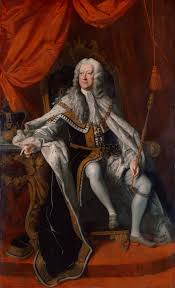
Eps 67: Biography Of King George The Second Of Great Britain
— history
King George II of Great Britain, born in 1683, was the last British monarch born outside Great Britain. He ascended to the throne in 1727 and reigned until 1760. His rule was marked by struggles for power with his son, Frederick, Prince of Wales, and his ministers, particularly Sir Robert Walpole. George II had a significant military role, personally leading troops at the Battle of Dettingen in 1743, the last British monarch to do so. His reign saw the expansion of the British Empire, improvements in trade, and the establishment of a strong Hanoverian succession. Though not highly intellectual, his pragmatic and disciplined approach contributed to stability in a time of political and military turbulence. George II died in 1760 and was succeeded by his grandson, George III.
| Seed data: | Link 1 |
|---|---|
| Host image: | StyleGAN neural net |
| Content creation: | GPT-3.5, |
Host

Cody Olson
Podcast Content
During George II’s reign, Britain experienced substantial expansion, notably strengthening its position in the burgeoning global trade network. The War of Austrian Succession (1740-1748) and the Seven Years' War (1756-1763) were significant conflicts that marked his reign, with Britain emerging as a dominant colonial power by the end of the latter. These wars significantly influenced the geopolitical landscape of the 18th century, enhancing British influence in North America, the Caribbean, and India.
George II also oversaw significant political shifts within Britain itself. The evolution of parliamentary democracy was rapid during his tenure, with the role of the Prime Minister becoming more prominent. He had a particularly notable relationship with Sir Robert Walpole, often regarded as the first de facto Prime Minister of Britain. Walpole’s tenure established the precedents and practices that would shape the office and British politics for centuries.
Culturally, George II's reign was marked by the flourishing of the arts and sciences. The period saw the rise of figures like Handel, whose compositions received royal patronage, and it was an era of advancement in literature, philosophy, and sciences. The foundations of the British Museum were laid during his reign, symbolizing a dedication to knowledge and culture.
King George II’s reign was also marked by numerous domestic issues, including debates over the succession, religious tolerance, and economic policies. He was often physically active, even leading his troops in battle during the War of Austrian Succession, and was the last British monarch to do so. His death in 1760 saw the crown pass to his grandson, George III, ushering in a new era in British history.
In examining George II’s complex legacy, one finds a monarch whose reign was pivotal in transitioning Britain towards a modern state, balancing between deep-seated traditions and unprecedented global expansion. His strengthened naval power, expanding empire, and enhanced parliamentary system set the stage for Britain’s future as a global power.