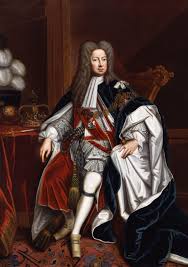
Eps 66: Biography Of King George The First Of Great Britain And Elector of Hanover
— history
King George I of Great Britain and Elector of Hanover was born in 1660 in Hanover. He ascended to the British throne in 1714 following the death of Queen Anne, becoming the first monarch from the House of Hanover due to the Act of Settlement 1701, which aimed to secure a Protestant succession. His reign marked a significant shift in British politics, with the development of the modern system of cabinet government and the rise of the first Prime Minister, Robert Walpole. George I faced internal challenges, including the Jacobite uprisings, which sought to restore the Stuart monarchy. Despite his German background and limited English proficiency, he contributed to stabilizing the Protestant monarchy and enhancing the political landscape of Britain. His reign lasted until his death in 1727, after which he was succeeded by his son, George II.
| Seed data: | Link 1 |
|---|---|
| Host image: | StyleGAN neural net |
| Content creation: | GPT-3.5, |
Host

Louis Miles
Podcast Content
As a king who spoke little English and was more comfortable with the administrative styles of Hanover, George I's early reign was marred by significant challenges, particularly the Jacobite uprisings, which sought to restore the Stuart line. Despite these issues, George proved adept at balancing his dual roles. He often left British affairs to his ministers, facilitating the development of the modern Cabinet system of government. George also maintained active involvement in Hanover's governance, favoring it as his primary residence and spending a significant portion of his reign in his German electorate. This dual kingship had profound implications for British foreign policy, particularly in relation to European affairs, and helped link British interests more closely with those of the continent.
George's personal life, however, was less stable. His marriage to Sophia Dorothea of Celle was notoriously unhappy and ended in separation due to mutual infidelities. After their separation, Sophia Dorothea was imprisoned, a scandal that tainted George's reputation both in Hanover and Britain. Despite these personal tribulations, George's reign saw important developments, including the consolidation of the Whig Party's dominance, which influenced British politics for decades. His pragmatic approach to both his British and Hanoverian roles allowed him to oversee a period of relative stability and growth.
While George I might not have been a beloved figure, his reign fundamentally shaped the course of British history. He laid the foundations for the political and constitutional evolution that would continue under his successors. George I's death on June 11, 1727, brought an end to the dual kingship that had defined his life, but his legacy as the inaugurator of the Hanoverian era remained firmly entrenched in the annals of British history. His reign, marked by the intertwining of British and Hanoverian interests, set the stage for a century that would see Britain become a preeminent global power.