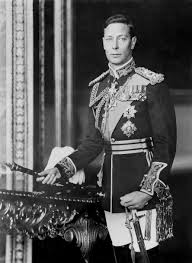
Eps 80: Biography Of King George The 6th Of The United Kingdom
— history
King George VI, originally named Albert Frederick Arthur George, was born on December 14, 1895. He never expected to become king but ascended the throne after his brother, Edward VIII, abdicated. George VI was known for his shy demeanor and struggled with a stammer, which he worked to overcome with the help of speech therapist Lionel Logue. His reign included leading Britain through World War II, where his steadfast leadership and work to maintain public morale were crucial. George VI was married to Elizabeth Bowes-Lyon, and they had two daughters, Elizabeth and Margaret. His health declined post-war, and he died on February 6, 1952, leading to the ascension of his daughter, Queen Elizabeth II.
| Seed data: | Link 1 |
|---|---|
| Host image: | StyleGAN neural net |
| Content creation: | GPT-3.5, |
Host

Beth Cunningham
Podcast Content
One of George VI's first significant actions as king was to prepare his nation for war. His stammer, initially seen as a potential weakness, became an emblem of his determination and courage. His speeches, notably aided by the speech therapist Lionel Logue, resonated deeply with a British public facing the onslaught of war. His leadership, alongside Prime Minister Winston Churchill, was pivotal through the dark days of the Blitz and the ongoing struggles of the war years. George VI tirelessly visited bombed areas, troops, and war factories, offering moral support and rallying the nation's spirit.
Domestically, he was a figure of stability and tradition, embodying the virtues of duty and service. Despite personal health issues, including lung problems exacerbated by a lifelong smoking habit, he continued to fulfill his royal duties with steadfast commitment. His partnership with Queen Elizabeth, later the Queen Mother, was a cornerstone of his reign, reinforcing a sense of continuity and reliability in the monarchy. Together, they had two daughters: Elizabeth, who would become his successor as Queen Elizabeth II, and Margaret.
As the war ended, George VI played a crucial role in the transition to a post-war society, overseeing the decolonization of India and other parts of the British Empire. His reign saw the beginning of the transformation of the British Empire into the Commonwealth of Nations, a significant shift in global dynamics. George VI's later years were marred by illness, leading to his untimely death on February 6, 1952. His legacy, however, endures; he is remembered for his courage, dedication, and the stability he provided during one of the most challenging periods in British history. The story of King George VI is a poignant testament to an underdog king who, against all odds, brilliantly served his country when it needed him most.