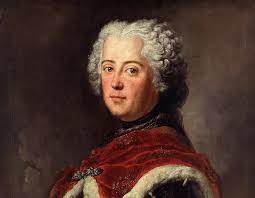
Eps 28: Biography Of King Frederick The Great Of Prussia
— History
Frederick II, known as Frederick the Great, was born on January 24, 1712, in Berlin, Prussia. He became King of Prussia in 1740 and ruled until his death in 1786. His reign is noted for significant military victories, administrative reforms, and cultural impact. Frederick modernized the Prussian army and achieved substantial territorial expansion, notably during the Silesian Wars and the Seven Years' War. Despite his harsh military policies, he was also a patron of the arts and an enlightened monarch, promoting education, legal reform, and religious tolerance. His leadership style and achievements solidified Prussia as a major European power and left a lasting legacy on German and European history.
| Seed data: | Link 1 |
|---|---|
| Host image: | StyleGAN neural net |
| Content creation: | GPT-3.5, |
Host

Katie Morris
Podcast Content
Frederick was not only a brilliant military strategist but also a proponent of enlightened absolutism. Voltaire, the French Enlightenment thinker, was among his correspondents, and Frederick sought to modernize Prussia's bureaucracy, legal systems, and economy. He championed the arts and philosophy, earning the moniker "The Philosopher King." Domestically, he reformed the civil service, promoted religious tolerance, and supported scientific endeavors. His military campaigns, however, continued to define his rule. The Seven Years' War (1756-1763) tested his strategic genius and, although it left Prussia economically strained, it solidified Frederick's reputation as one of Europe's foremost military leaders.
Frederick's domestic policies were equally transformative. He worked tirelessly to rebuild and modernize Prussia after the Seven Years' War, focusing on agriculture to ensure food security and initiating infrastructural developments like the construction of canals. His legal reforms laid the groundwork for a more meritocratic civil service, reducing the influence of the aristocracy and promoting a system based on ability rather than birthright. His emphasis on education and culture also had a long-lasting impact; he founded numerous schools and academies, fostering an environment where arts and sciences could flourish.
Frederick's legacy is complex and multifaceted. His military victories and territorial expansions firmly established Prussia as a major European power. Yet, he also left a mark through his cultural and administrative reforms. He died on August 17, 1786, after a lengthy reign of 46 years, remembered as a monarch who blended the arts of war and peace with unparalleled skill. His contributions to statecraft, military strategy, and cultural patronage have ensured his place in history as Frederick the Great, a title he earned not only on the battlefield but as a visionary ruler who shaped the course of Prussian—and European—history.