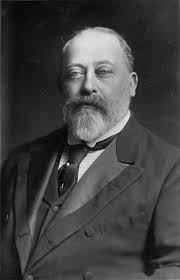
Eps 73: Biography Of King Edward The Seventh Of The United Kingdom
— history
King Edward VII of the United Kingdom was born in 1841 as the eldest son of Queen Victoria and Prince Albert. Known as "Bertie" within the family, he was not initially groomed for kingship because his mother had a very long reign. Edward spent much of his life as Prince of Wales and was well-known for his social life, which was filled with travels, dinners, parties, and affairs. He ascended to the throne in 1901 following Queen Victoria's death and reigned until 1910. Edward VII played a key role in modernizing the British Home Fleet and restructuring the army after the Boer War. His time as King was marked by fostering good relations with other European nations, notably through his diplomatic skills. Despite his short reign, his influence on British society and his ability to manage international relations left a lasting legacy. Edward VII’s reign was also characterized by significant cultural changes and advances in science and industry. He was succeeded by his son, George V, after his death in 1910.
| Seed data: | Link 1 |
|---|---|
| Host image: | StyleGAN neural net |
| Content creation: | GPT-3.5, |
Host

Max Cooper
Podcast Content
In 1863, Edward married Alexandra of Denmark, a union that was to manage but not entirely constrain his scandalous personal life. Renowned for his charm and charisma, he established himself as a prominent figure in British society. The death of Queen Victoria in 1901 marked Edward's ascent to the throne at the age of 59, making him an elderly successor by historical standards. Despite this late start, his reign heralded significant modernization and sociopolitical changes. The Edwardian era, as it became known, was characterized by technological advancements and shifting cultural paradigms, diverging from Victorian conservatism.
Edward VII was notably more affable and approachable than his mother, ushering a new era of diplomacy. His foreign tours and international relations, particularly with France, were instrumental in forming the Entente Cordiale, which significantly realigned European geopolitics. Domestically, his government saw the People's Budget of 1909, an audacious step toward taxation reforms and welfare policies aimed at reducing inequality. These efforts laid groundwork for the future welfare state.
A patron of the arts and sciences, Edward's support extended to various causes, subtly influencing public attitudes towards modernization and social reform. Yet, his reign was not without contention. He navigated the tensions of the Boer Wars, the Irish Home Rule debates, and escalating pressures within the British Empire. Edward’s pragmatic approach to such issues reflected an acute awareness of his nation's shifting dynamics.
Health challenges marked Edward’s latter years, culminating in his death on May 6, 1910. His legacy is captured in the juxtaposition of a previously playboy prince who matured into a reformist monarch. Edward VII’s fingerprints on early 20th-century Britain were indelible, framing a seamless transition from the rigid Victorian ethos to a more liberal and modern Britain. His brief but impactful reign prepared the kingdom for the complexities of the ensuing decades, making him a pivotal character in British history.