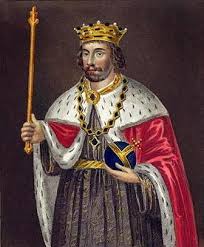
Eps 36: Biography Of King Edward The Second Of England
— history
King Edward II of England, born in 1284, was the fourth son of Edward I and ascended to the throne in 1307. His reign was marked by military failures, including the Battle of Bannockburn in 1314, which solidified Scottish independence under Robert the Bruce. Edward's favoritism towards certain courtiers, particularly Piers Gaveston and later Hugh Despenser, sparked resentment among the nobility and led to political turmoil. Opposition culminated in a rebellion led by his wife, Queen Isabella, and her lover, Roger Mortimer, in 1326. Edward was deposed in 1327 and imprisoned, eventually dying under mysterious circumstances, believed by some to have been murdered. His son, Edward III, succeeded him, signaling the end of a tumultuous reign.
| Seed data: | Link 1 |
|---|---|
| Host image: | StyleGAN neural net |
| Content creation: | GPT-3.5, |
Host

Ken Robinson
Podcast Content
Edward's reign suffered further turmoil as he faced military setbacks, most notably the disastrous defeat at the Battle of Bannockburn in 1314, where the Scots, led by Robert the Bruce, secured a decisive victory. This loss weakened Edward's political strength, causing tensions with both the barons and his wife, Isabella of France. By 1321, the nation's governance was deeply fractured, with the king's reliance on another favorite, Hugh Despenser the Younger, exacerbating noble rebellions.
Isabella and her lover, Roger Mortimer, orchestrated an invasion in 1326, leading to Edward's capture and forced abdication in favor of his son, Edward III, in January 1327. Edward II's imprisonment in Berkeley Castle would soon turn tragic; he was allegedly murdered under mysterious and brutal circumstances later that year. His death marked an ignominious end to a troubled reign, and despite his failures, his life remains a focal point of medieval English history, a testament to the complexities and vulnerabilities of monarchy.