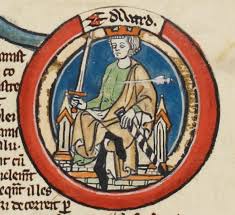
Eps 10: Biography Of King Edward The Martyr Of England
— history
King Edward the Martyr was born in the early 960s to King Edgar the Peaceful and his first wife, Æthelflæd. After Edgar's death in 975, Edward ascended to the throne of England at a young age, amid political contention. His reign, although brief, was marked by conflicts with powerful factions within the kingdom, including his stepmother, Queen Dowager Ælfthryth, who sought the throne for her son, Æthelred. Edward's rule ended abruptly in 978 when he was murdered at Corfe Castle, likely orchestrated by those in favor of Æthelred's succession. His death led to his veneration as a martyr and later canonization by the Church, commemorating him as a symbol of piety and legitimacy in turbulent times.
| Seed data: | Link 1 |
|---|---|
| Host image: | StyleGAN neural net |
| Content creation: | GPT-3.5, |
Host

Gertrude Boyd
Podcast Content
Edward's reign, though brief, was fraught with challenges. The kingdom faced ongoing threats from Viking incursions and internal conflicts among the nobility. His youth and inexperience were pitted against experienced and opportunistic noblemen who sought to exploit the situation. Nevertheless, Edward attempted to assert his authority and maintain the unity of the kingdom. His dedication to the church and his earnest efforts to uphold justice suggested he had the potential to grow into a capable ruler. Tragically, that potential was never realized.
In 978 AD, Edward was assassinated in a plot that was widely believed to have been orchestrated by his stepmother Ælfthryth and her supporters, who sought to place Æthelred on the throne. The young king was murdered at Corfe Castle in Dorset while visiting his stepbrother. As Edward approached the castle, he was offered a cup of mead by Ælfthryth’s followers and was then suddenly attacked and killed. The brutal nature of his death and the subsequent political maneuvering to install Æthelred as king cast a long shadow over his short reign.
Edward's body was initially buried without honor, but his death quickly came to be regarded as martyrdom by contemporary and later chroniclers. Miraculous occurrences reported at his initial burial site led to his remains being exhumed and reinterred with royal honors at Shaftesbury Abbey, a site that became a place of pilgrimage. Edward was canonized as a saint, and his feast day is observed on March 18th. His legacy, bound up in the narrative of a young life cut short by treachery, reflects the volatile and often brutal nature of medieval power struggles. Edward the Martyr is remembered not just as a tragic figure but as a symbol of piety and innocence in a time of great turmoil.