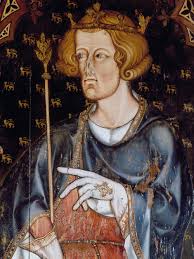
Eps 35: Biography Of King Edward The First Of England
— history
King Edward I of England, known for his formidable leadership and influence, reigned from 1272 to 1307. He was instrumental in implementing administrative reforms and strengthening the English monarchy. Edward was a skilled military leader, most notably for his campaigns in Wales which led to its annexation and the construction of imposing castles. His efforts to conquer Scotland were less successful, though they marked significant periods of conflict. Edward's reign was also marked by legislative reforms and the development of the English Parliament. Despite his successes, his rule faced criticisms, particularly due to his harsh policies towards the Jews, including their expulsion from England in 1290. Edward's legacy is a complex blend of military prowess, administrative innovation, and controversial policies.
| Seed data: | Link 1 |
|---|---|
| Host image: | StyleGAN neural net |
| Content creation: | GPT-3.5, |
Host

John Lowe
Podcast Content
Edward's rule was not without controversy. His attempt to conquer Scotland, known as the First War of Scottish Independence, embroiled the kingdom in protracted conflict. Although initially successful in bringing Scottish lands under English rule, the fervent resistance led by figures such as William Wallace and Robert the Bruce ensured that his campaign was ultimately incomplete at the time of his death. Domestically, Edward confronted the complex dynamics of his barons and broader political community, maneuvering through the fractious landscape with a blend of assertiveness and pragmatism. His ability to engage with Parliament laid foundational aspects of governance that would endure long after his reign.
On a personal level, Edward's pious nature and devotion to his queen, Eleanor of Castile, manifestly shaped his image. Their marriage was notably successful, producing sixteen children and demonstrating a partnership that profoundly influenced Edward's reign and personal outlook. After Eleanor's death, Edward's tribute to her through the construction of the Eleanor Crosses highlighted his deep reverence and the cultural resonance of their union.
Edward I's legacy is a tapestry woven with expansionist ambition, legal innovation, and the unyielding pursuit of authority. He left an indelible mark on the historical consciousness of England, a monarch whose aspirations toward unity and order, though not fully realized within his lifetime, charted the course for subsequent generations. His death in 1307 saw the ascent of his son, Edward II, who would inherit both the burdens and aspirations of his father's reign, leaving a kingdom that, though more consolidated, was still sketching the contours of its future identity.