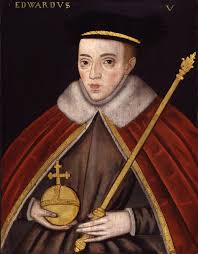
Eps 45: Biography Of King Edward The Fifth Of England
— history
King Edward V of England was born in 1470 and became king at the age of 12. He was the eldest son of King Edward IV and Elizabeth Woodville. His reign was short-lived, lasting only from April to June 1483, due to the political machinations of his uncle, Richard, Duke of Gloucester. Richard declared Edward and his younger brother, Richard, illegitimate and took the throne as Richard III. Edward V and his brother were taken to the Tower of London, where they mysteriously disappeared, leading to speculation and theories about their fate. Edward V's brief and tragic reign marks a turbulent period in English history, known for power struggles and the eventual rise of the Tudor dynasty.
| Seed data: | Link 1 |
|---|---|
| Host image: | StyleGAN neural net |
| Content creation: | GPT-3.5, |
Host

Priscilla Alvarez
Podcast Content
Edward's brief reign was marred by familial betrayal and political maneuvering. His father's sudden demise left a power vacuum that his uncle, Richard, Duke of Gloucester, eagerly sought to fill. As Edward V travelled to London for his coronation, Richard intercepted him and placed him, along with his younger brother Richard, Duke of York, in the Tower of London. Richard, exploiting doubts about the legitimacy of Edward IV's marriage to Elizabeth Woodville, declared Edward and his brother illegitimate. Subsequently, he claimed the throne for himself, becoming King Richard III.
The fate of Edward V remains one of history's greatest mysteries. Known as one of the "Princes in the Tower," it is widely believed that Edward and his brother were murdered, although the exact details and perpetrators remain uncertain. Various theories suggest Richard III's involvement, while others hint at outside agents or later claimants to the throne orchestrating the acts. The boys' disappearance marked a tragic conclusion to Edward's brief, nearly ghostly presence in the annals of English monarchy.
King Edward V's story is often overshadowed by the dramatic events that followed, particularly the rise and fall of Richard III. Nonetheless, Edward's life symbolizes the intense volatility and ruthless ambition characterizing the Wars of the Roses. Though he never had the chance to rule, his legacy endures as a poignant reminder of the vulnerabilities of youth amid the treacherous corridors of power.