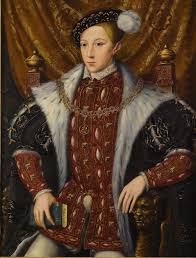
Eps 51: Biography Of King Edward The 6th Of England
— history
King Edward VI of England was born on October 12, 1537, to Henry VIII and Jane Seymour. His mother died shortly after his birth, leaving him as the only male heir to the Tudor dynasty. Edward became king at the age of nine after the death of his father in 1547. His reign was heavily influenced by his regents, primarily his uncle, Edward Seymour, Duke of Somerset, and later John Dudley, Duke of Northumberland. During Edward's reign, significant religious changes took place, advancing the English Reformation. The Book of Common Prayer was introduced, and the Church of England became more distinctly Protestant. Edward himself was a staunch Protestant and supported these reforms. His health was fragile throughout his life, and he suffered from various ailments. Edward VI's reign was marked by economic and social issues, including poor harvests, inflation, and unrest. He died on July 6, 1553, at the age of 15, most likely from tuberculosis. His early death led to a brief succession crisis, ultimately resulting in the ascension of his half-sister, Mary I, who attempted to restore Catholicism in England. Edward VI is remembered for his significant but short-lived impact on the English Reformation.
| Seed data: | Link 1 |
|---|---|
| Host image: | StyleGAN neural net |
| Content creation: | GPT-3.5, |
Host

Byron Hopkins
Podcast Content
Edward's reign is profoundly noted for its vigorous push towards Protestantism, mirroring his own deep religious convictions shaped by his tutors. Under his rule, England saw the establishment of the Book of Common Prayer in 1549, a seminal moment in English Reformation history. This radical shift sought to mark a clear departure from Catholic practices, indelibly transforming the religious landscape of England. Edward's administration also advanced several financial and administrative reforms, albeit facing resistance and unrest, notably the uprisings such as Kett's Rebellion.
Despite his intellectual prowess and fervor for change, Edward's reign was tragically marred by poor health. He succumbed to tuberculosis on July 6, 1553, at the age of 15, an event that precipitated a succession crisis. Edward, guided by his religious zeal, attempted to ensure a Protestant succession by naming his cousin, Lady Jane Grey, as his heir. This decision, however, quickly unraveled, leading to the eventual ascension of his Catholic half-sister, Mary I. Edward VI's brief life and reign left a potent yet controversial legacy, a testament to his enduring influence on England's religious and political spheres despite his youth and limited time on the throne.