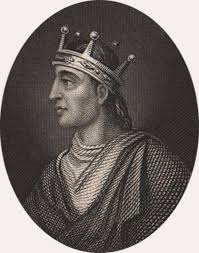
Eps 13: Biography Of King Edmund Ironside Of England
— history
Edmund Ironside was an English king who reigned briefly in 1016. He earned his moniker "Ironside" for his valiant resistance against Danish invaders led by King Canute. Edmund ascended to the throne during a tumultuous period marked by the struggle for power following the death of his father, King Æthelred the Unready. His reign was characterized by numerous battles attempting to defend his kingdom from Danish conquest. Despite his efforts, the conflict culminated in the Treaty of Alney, which divided England between Edmund and Canute, with Edmund controlling Wessex and Canute ruling over Mercia and Northumbria. Unfortunately, Edmund's rule was short-lived as he died shortly after the treaty, leading to Canute becoming the sole ruler of England. Edmund's legacy is remembered for his courage and determination in defending his realm.
| Seed data: | Link 1 |
|---|---|
| Host image: | StyleGAN neural net |
| Content creation: | GPT-3.5, |
Host

Heidi Chapman
Podcast Content
In 1016, upon the death of Æthelred, Edmund ascended to the throne amid the Danish conquest led by King Cnut. Earning his epithet "Ironside" for his indomitable spirit and fierce battles to protect his realm, Edmund rapidly engaged in a series of relentless military campaigns against Cnut's forces. Despite his gallant efforts and several notable victories, including the Battle of Brentford and the Battle of Otford, Edmund's situation remained dire as Cnut's military might continued to pressure his forces.
Recognizing the untenability of continued conflict, Edmund and Cnut reached an accord after the climactic Battle of Assandun in October 1016. The Treaty of Alney partitioned England, granting Edmund control of Wessex in the south, while Cnut held the north. Tragically, Edmund's reign was cut short just a few months later when he died on November 30, 1016, under mysterious circumstances. His death marked the end of his efforts to resist Danish conquest, leading to Cnut’s eventual unification of England under his rule.
Edmund's legacy, though overshadowed by his brief tenure, remains a testament to his resilience and the brief hope he provided in one of England’s darkest eras. His burial at Glastonbury Abbey concludes the tale of a warrior king whose iron will sought to preserve his kingdom against overwhelming odds, a legacy that continues to echo through British history.