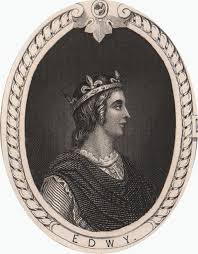
Eps 8: Biography Of King Eadwig Of England
— history
King Eadwig of England became king at a young age in 955 after his predecessor, King Eadred, passed away. His reign was notably brief and tumultuous, lasting just four years. Historians often highlight a controversial incident early in his reign when he left his own coronation feast to be with a noblewoman named Ælfgifu. This act displeased the church, particularly the powerful cleric Dunstan, who consequently fell out of favor with the young king. Eadwig's reign was marked by feuds with the church and nobility, which weakened his rule. In 957, tensions escalated to the point where the kingdom was effectively divided, with the northern nobility supporting his brother, Edgar. Eadwig was left ruling the southern part until his sudden death in 959 at the age of around 20. His brief rule is often depicted as a period of internal strife and challenges to monarchical authority, ending as abruptly as it began.
| Seed data: | Link 1 |
|---|---|
| Host image: | StyleGAN neural net |
| Content creation: | GPT-3.5, |
Host

Dianne Douglas
Podcast Content
Eadwig's reign was riddled with internal strife, partly due to his rocky relationship with the church and the noble class. His decision to marry Aelgifu was annulled by the Church on the grounds of consanguinity, further driving a wedge between him and his subjects. Significant portions of his rule were spent in quelling internal revolts, and he faced persistent challenges from his own family. His younger brother, Edgar, was positioned as a rival, gaining significant support from influential factions, particularly in Mercia and Northumbria. The kingdom was effectively divided in 957, with Eadwig retaining control of Wessex and Kent, while Edgar ruled over Mercia and Northumbria.
Eadwig's rule came to an abrupt end when he died mysteriously in 959 at the tender age of around 19. Despite his short and troubled reign, his death allowed his brother Edgar to assume the throne, bringing a period of relative stability and prosperity to England. King Eadwig's life and reign serve as a poignant example of the turbulence that often characterized early medieval English monarchy, with his personal and political struggles reflecting the broader conflicts of his time. While he never enjoyed the lasting acclaim of more successful rulers, Eadwig’s story is an indelible chapter in the rich tapestry of England’s history.