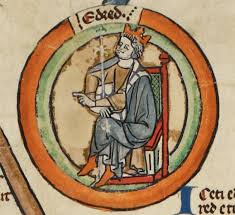
Eps 7: Biography Of King Eadred Of The English
— history
King Eadred of the English, who reigned from 946 to 955, was the son of King Edward the Elder and Eadgifu of Kent. His reign was marked by his efforts to consolidate English control over the Northumbrians, who had previously been under Viking rule. Eadred was dedicated to unifying England and sought to strengthen the monarchy's power by building alliances with influential church leaders. Despite his relatively short reign, he managed to bring stability and further the unification process initiated by his predecessors. Eadred's health was fragile, and his physical ailments eventually led to his early death at the age of 32. He was succeeded by his nephew, King Edwy.
| Seed data: | Link 1 |
|---|---|
| Host image: | StyleGAN neural net |
| Content creation: | GPT-3.5, |
Host

Daisy Shelton
Podcast Content
Eadred continued the policies of his brother and predecessors, working tirelessly to strengthen the bonds between the various English kingdoms. His reign is particularly noted for the unification of Northumbria under the English crown. This was no small feat, given Northumbria's history of being a volatile and fragmented region with strong Viking influence. In 947 AD, the Northumbrians accepted Eadred as their king, but their allegiance was fickle. When they subsequently rebelled and aligned themselves with the Viking king Erik Bloodaxe, Eadred launched a punitive campaign, demonstrating his military prowess by devastating the kingdom and asserting his dominance.
Despite his military successes, Eadred's reign was marred by his worsening health. Contemporary records suggest that he suffered from a chronic and debilitating illness, which likely overshadowed much of his efforts and hampered his ability to govern effectively. Nevertheless, he surrounded himself with competent advisors and officials, ensuring that the administration of the kingdom remained steady. One of his chief accomplishments was maintaining the support of the church, which continued to play a pivotal role in the governance and cultural cohesion of the time.
Eadred's relationship with the church was bolstered by notable ecclesiastical figures such as Saint Dunstan, who would later become the Archbishop of Canterbury. Dunstan's influence was significant in promoting monastic reform and stability within the kingdom. Eadred, aware of the importance of church support, endowed monasteries and worked closely with religious leaders to fortify his rule and legitimize his authority. This alliance not only helped to solidify his control but also laid the groundwork for future reforms that would profoundly impact English society.
Eadred's reign came to an end with his untimely death in 955 AD, and he was succeeded by his nephew, Eadwig. Though his time on the throne was relatively short and overshadowed by physical suffering, Eadred's efforts in consolidating the kingdom and handling the Northumbrian challenges were crucial in the ongoing process of unification. His legacy is a testament to the resilience and determination required to steer a kingdom through tumultuous times. King Eadred's story may not be as widely celebrated as those of some of his more illustrious relatives, but his contributions to the English realm remain significant in the annals of history.