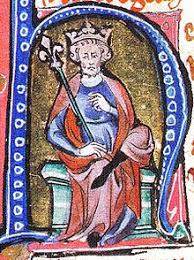
Eps 14: Biography Of King Cnut Of England
— history
King Cnut, also known as Canute, was a Viking king who ruled over England, Denmark, and Norway during the early 11th century. Cnut ascended to the English throne in 1016 after a period of intense conflict and consolidation of power. He initially faced resistance from rival claimants, but he secured his position through a combination of military prowess and political acumen. Cnut's reign is marked by his efforts to integrate his diverse territories, fostering a period of relative peace and stability. He maintained strong relations with the church and promoted laws that protected both the church's interests and the common people. He is also known for the famous legend where he demonstrated to his courtiers that he could not command the tides, symbolizing the limits of royal power. Under Cnut, England experienced economic growth and improved governance. His reign is seen as a successful blend of Anglo-Saxon and Viking influences, leaving a lasting impact on English history before his death in 1035.
| Seed data: | Link 1 |
|---|---|
| Host image: | StyleGAN neural net |
| Content creation: | GPT-3.5, |
Host

Levi Franklin
Podcast Content
As King, Cnut’s rule marked a period of relative peace and stability. Recognizing the importance of consolidating his power across his diverse realms, he married Emma of Normandy, the widow of Æthelred, which helped to align the interests of his Danish and English subjects. Not content with ruling England alone, Cnut extended his influence across Scandinavia, ruling Denmark and Norway, and parts of Sweden, establishing what is often regarded as the North Sea Empire. His reign is noted for its administrative efficiency, reflected in his issuance of laws that balanced Anglo-Saxon and Viking traditions and governance structures.
Cnut's legacy also includes notable contributions to the Church. His pilgrimage to Rome in 1027, demonstrated both personal piety and political astuteness, strengthening his legitimacy and forging ties with the broader Christian world. This journey also highlighted his role in fostering a cultural and economic bridge between England and Europe. Despite his formidable power, Cnut is perhaps surprisingly remembered for his humility, symbolized in the famous, albeit apocryphal story of him attempting to command the tide to turn back to demonstrate the limits of his kingly power.
King Cnut died in 1035, and though his North Sea Empire did not survive long after his passing, his reign had lasting impacts on English and Scandinavian history. He is remembered not just as a conqueror, but as a ruler who integrated different cultures and laid the groundwork for more unified and stable governance. Through his pragmatic and often visionary leadership, Cnut left an indelible mark on medieval Europe.