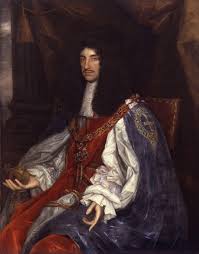
Eps 60: Biography Of King Charles The Second Of England
— history
King Charles II of England, known for his charm and political acumen, was restored to the throne in 1660 after years of exile following the English Civil War and the subsequent rule of Oliver Cromwell. His reign, known as the Restoration period, was marked by a flourishing of arts and culture as well as significant political developments. Charles worked to stabilize the monarchy and navigate a complex relationship with Parliament and religious factions. His foreign policy saw alliances and conflicts, notably with the Dutch and French. Personal scandals and numerous mistresses characterized his court, leading to a mixed legacy. He successfully reestablished the monarchy's position, despite facing several controversial issues during his rule.
| Seed data: | Link 1 |
|---|---|
| Host image: | StyleGAN neural net |
| Content creation: | GPT-3.5, |
Host

Perry Bowman
Podcast Content
Charles II navigated a political landscape fraught with the aftershocks of the Civil War, religious division, and power struggles with Parliament. He was an astute and pragmatic ruler, known for his diplomatic maneuvers, such as the secret Treaty of Dover in 1670 with Louis XIV of France, which secured financial support in exchange for a promise to relax laws against Catholics—a controversial move given England's Protestant majority. His reign wasn't without its crises; the Great Plague of 1665, the Great Fire of London in 1666, and repeated wars with the Dutch strained his resources and tested his leadership. Charles II’s era also witnessed scientific advancements and the formation of the Royal Society in 1660, which underscored the king's interest in the sciences and the intellectual rigor of his court.
Despite his successes, Charles II’s reign was shadowed by the persistent issue of succession. His lack of legitimate heirs—he acknowledged numerous illegitimate children—left his brother, James, Duke of York, next in line, causing considerable tension due to James's Catholic faith. This unease contributed to the Exclusion Crisis, a series of political struggles aimed at preventing James from ascending the throne, which reflected the growing fear of Catholic influence in Protestant England. Charles II adeptly managed to outmaneuver many of his opponents, utilizing his charm, political sagacity, and occasional heavy-handedness to maintain his position.
Towards the end of his reign, Charles II's legacy became clearer. Though he reinstated the monarchy and provided a semblance of stability after years of civil strife, his reign did not resolve the underlying religious and political tensions. His death on February 6, 1685, marked the end of his attempts to balance a delicate political landscape. Despite the controversies and warfare, Charles II is remembered for his contribution to the cultural and scientific renaissance of England, making his reign one of the more colorful and complex chapters in British history. His ability to blend laissez-faire governance, personal charisma, and political acumen left a lasting imprint on the landscape of the English monarchy and its restoration period.