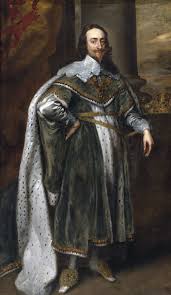
Eps 59: Biography Of King Charles The First Of England
— history
The podcast provides a detailed overview of King Charles I of England, focusing on his biography. Charles I was the second son of James VI of Scotland and Anne of Denmark. He ascended to the English throne in 1625 following the death of his father, James I of England. His reign was marked by religious and political conflicts. Charles I faced significant opposition due to his belief in the divine right of kings, which led him to attempt to govern without Parliament. This stance caused friction with both Parliament and his subjects, worsening tensions over issues such as tax policies and national governance. These conflicts eventually escalated into the English Civil War between the Royalists, who supported the king, and the Parliamentarians. Charles' defeat in the Civil War led to his capture, trial, and execution for high treason in 1649, marking the first time a reigning English monarch was legally deposed and executed by his own government. The monarchy was temporarily abolished, and England became a commonwealth under Oliver Cromwell. Charles I's reign is remembered for its profound impact on English history, particularly regarding the limits of royal authority and the rise of parliamentary power.
| Seed data: | Link 1 |
|---|---|
| Host image: | StyleGAN neural net |
| Content creation: | GPT-3.5, |
Host

Max Cooper
Podcast Content
Charles's attempts to enforce religious uniformity led to conflicts not only in England but also in Scotland and Ireland. His introduction of the Anglican Book of Common Prayer in Scotland in 1637 provoked the Bishops' Wars, further draining the royal coffers. By 1642, the strained relationship between the crown and Parliament culminated in the outbreak of the English Civil War. Charles's forces, known as the Royalists, faced off against the Parliamentarians, led by Oliver Cromwell. After a series of defeats, Charles was captured by the Scots and handed over to Parliament in 1647.
Despite being imprisoned, Charles continued to intrigue and negotiate for his release, leading to a second phase of the Civil War. His efforts ultimately failed, and in 1648 he was brought to trial by a specially convened court. Found guilty of high treason, he was sentenced to death. On January 30, 1649, King Charles I was executed outside the Banqueting House in Whitehall, London, an unprecedented act that shocked Europe. His death marked a significant turning point in British history, leading to the temporary abolition of the monarchy and the establishment of the Commonwealth under Cromwell's rule. Charles's legacy remains complex: he is remembered both as a martyr by Royalists and a tyrant by those who championed parliamentary sovereignty.