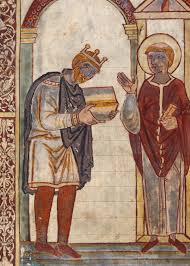
Biography Of King Athelstan Of The Anglo Saxons

Tags:

Biography King Athelstan Anglo Saxons History Medieval England Royalty

Eps 5: Biography Of King Athelstan Of The Anglo Saxons

history

King Athelstan, often considered the first King of all England, reigned from 924 to 939 AD. A grandson of Alfred the Great, Athelstan was instrumental in unifying various Anglo-Saxon kingdoms. He achieved a notable victory at the Battle of Brunanburh in 937, which solidified his rule and expanded his influence over Britain. Athelstan was a shrewd political and military leader, forging alliances through marriage, diplomacy, and military conquest. He also contributed significantly to the legal and administrative framework of England, implementing laws that strengthened royal authority and promoted justice. His reign marked a formative period in the development of a unified English nation.

Seed data: Link 1
Host image: StyleGAN neural net
Content creation: GPT-3.5,

Host

Sheila Griffin

Sheila Griffin

Podcast Content
Born around 894 AD, King Athelstan is frequently honored as the first true King of England, binding the mosaic of Anglo-Saxon territories into a unified kingdom. Athelstan, the grandson of Alfred the Great, came to power following the death of his father, King Edward the Elder. His reign, from 924 to 939 AD, was marked by numerous military triumphs, strategic marriages, and legal reforms that fortified the nascent English state. One of his most notable achievements was the Battle of Brunanburh in 937, where he defeated a coalition of Norse, Scots, and Strathclyde Britons, confirming the dominance of the Anglo-Saxon kingdom over its northern and western rivals. Athelstan's statesmanship extended beyond the battlefield; he was a benefactor of the Church, fostering monastic reform and ecclesiastical scholarship. His court was a beacon of culture, attracting scholars, poets, and clerics from across Europe, thanks to his support of education and legal codification. The succession of his half-brothers, Edmund I and later Edred, continued his consolidation efforts, but Athelstan's reign remains distinctly transformative, laying down the foundations of what would evolve into modern England. Athelstan died in 939 AD and was buried at Malmesbury Abbey. His legacy, shaped by both military and administrative acumen, endures as a pivotal chapter in the annals of English history.