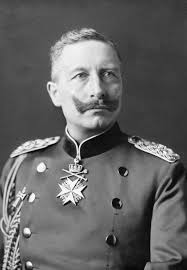
Eps 86: Biography Of Kaiser Wilhelm The Second Of Germany
— History
Kaiser Wilhelm II of Germany, born on January 27, 1859, was the last German Emperor and King of Prussia, reigning from June 15, 1888, until his abdication on November 9, 1918. Often remembered for his impetuous personality and militaristic tendencies, Wilhelm’s reign was marked by significant political and social changes, as well as the eventual descent into World War I. His foreign policy was characterized by aggressive stances, partially contributing to the volatile European atmosphere pre-war. The Kaiser often clashed with his ministers and advisors, leading to inconsistent governance. Following Germany's defeat in WWI, Wilhelm fled to the Netherlands and lived in exile until his death on June 4, 1941. His legacy is complex, with debates over his responsibility for the war and his role in shaping modern Germany.
| Seed data: | Link 1 |
|---|---|
| Host image: | StyleGAN neural net |
| Content creation: | GPT-3.5, |
Host

Miriam Lucas
Podcast Content
Wilhelm II, known for his impulsive and often erratic behavior, sought to establish Germany as a pre-eminent global power. He embarked on an ambitious program to expand the German Navy, hoping to rival the maritime dominance of the British Empire. This naval build-up, along with his aggressive foreign policies, fueled tensions among the major European powers. His reign was marked by a series of diplomatic crises, including the Moroccan Crises and the Balkans tensions, which contributed to the instability in Europe.
Domestically, Wilhelm's rule was characterized by a complex relationship with his chancellors and the Reichstag (German Parliament). His belief in the divine right of kings often brought him into conflict with democratic and socialist movements within Germany. Despite these internal struggles, Germany experienced significant industrial and economic growth during his reign, which further altered the social and political fabric of the nation.
However, Wilhelm's leadership faced critical scrutiny during the events leading up to and during World War I. His support for Austria-Hungary following the assassination of Archduke Franz Ferdinand set into motion a chain of alliances and enmities that plunged Europe into war. His involvement in the war effort and subsequent military failures severely tarnished his reputation. By the war's end, with Germany facing defeat and the German populace in turmoil, Wilhelm was forced to abdicate the throne on November 9, 1918, and he subsequently went into exile in the Netherlands.
Wilhelm spent his remaining years in seclusion at Huis Doorn, a manor in the Netherlands, where he wrote memoirs justifying his actions during the war and maintained hopes for a restoration of the monarchy—a hope that never materialized. He passed away on June 4, 1941, leaving a complicated legacy filled with ambition, militarism, and the unintended consequences of his imperial aspirations. Kaiser Wilhelm II's life remains a poignant study of the volatile interplay of personal ambitions and global politics, marking the end of an era and the dramatic shift toward modernity in Europe.