Eps 127: Biography Of Julius Caesar
— History
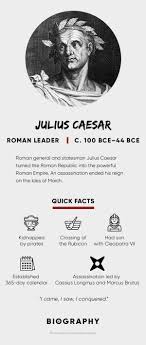
Julius Caesar was a prominent Roman general, statesman, and pivotal figure in the transformation of the Roman Republic into the Roman Empire. Born in 100 BC, he hailed from the patrician family of the Julii, claiming descent from the goddess Venus. Caesar's early political career was marked by a series of alliances, culminating in the First Triumvirate with Pompey and Crassus. His military campaigns, notably in Gaul, expanded Rome's territory and solidified his reputation as a formidable leader. The crossing of the Rubicon River in 49 BC signaled the start of civil war, leading to his dictatorship. He initiated key reforms, centralizing power and restructuring Rome's government. Despite his achievements, his concentration of power alienated many. His assassination on the Ides of March in 44 BC by a group of senators, including Brutus and Cassius, stemmed from fears of his growing power and potential monarchy. His death precipitated a series of conflicts, eventually leading to the rise of the Roman Empire under his adopted heir, Augustus. Caesar's legacy endures in military strategy, political reform, and his lasting impact on Roman governance.
| Seed data: | Link 1 |
|---|---|
| Host image: | StyleGAN neural net |
| Content creation: | GPT-3.5, |
Host

Katherine Edwards
Podcast Content
Caesar's relationships with other prominent figures of the time were equally significant. His alliance with Pompey and Crassus, known as the First Triumvirate, initially consolidated his power but eventually crumbled, setting the stage for civil war. By crossing the Rubicon River in 49 BC, Caesar dared to defy the Roman Senate, an act of insurrection that led to a clash with Pompey. Emerging victorious, he declared himself dictator for life in 44 BC, a position which he used to implement sweeping reforms, from the Julian calendar to numerous social and economic changes, aimed at stabilizing Rome and centralizing his control.
However, his ascent was not without dissent. Many senators feared his concentration of power and perceived threats to the Republic's traditions. This discontent culminated in the infamous Ides of March in 44 BC, when Caesar was assassinated by a group of senators led by Brutus and Cassius, men he had once considered allies. His death plunged Rome into another series of civil wars, ultimately leading to the rise of his grandnephew, Octavian, known as Augustus, who became the first Roman Emperor.
Julius Caesar's legacy is multifaceted. His military genius, political acumen, and bold reforms left an indelible mark on the Roman Empire. Yet, his life also serves as a cautionary tale about the volatility of absolute power and the fine line between leadership and tyranny. Caesar transformed the Roman Republic, laying the foundations for its transition into an empire, shaping the course of Western history for millennia to come.