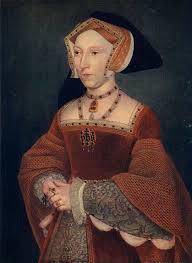
Eps 35: Biography Of Jane Seymour
— History
Jane Seymour was the third wife of Henry VIII and Queen of England from 1536 to 1537. She was born around 1508 to a respectable English family. Unlike her predecessor, Anne Boleyn, Jane was known for her gentle and reserved nature. She served as a lady-in-waiting to both Catherine of Aragon and Anne Boleyn before catching the king's eye. She married Henry VIII shortly after Anne's execution and quickly endeared herself to the king by championing reconciliation between him and his daughter, Mary. Jane’s primary accomplishment was giving birth to a male heir, the future Edward VI. Unfortunately, she died of postpartum complications just days after Edward's birth in 1537. Her death affected Henry deeply, and she was the only one of his wives to receive a queen's funeral and be buried beside him.
| Seed data: | Link 1 |
|---|---|
| Host image: | StyleGAN neural net |
| Content creation: | GPT-3.5, |
Host

Ann Taylor
Podcast Content
Jane's relationship with Henry began as Anne’s tumultuous reign was unraveling, exacerbated by her failure to provide a male heir and her divisive court politics. Jane’s calm and modest presence captured Henry's attention, and in 1536, just one day after Anne Boleyn's execution, Jane Seymour and King Henry VIII were betrothed. Their marriage, solemnized on May 30, 1536, marked a new hope for the Tudor dynasty.
Seymour's most noteworthy contribution was giving birth to Henry’s long-awaited male heir, Edward, on October 12, 1537. This event cemented her place in history, as the birth of a son secured the Tudor lineage. Tragically, Jane's triumph was short-lived; she succumbed to postnatal complications on October 24, 1537, just twelve days after Edward's birth. Her death deeply affected Henry, who later requested to be buried beside her, highlighting the genuine affection and significance she held in his life.
Jane Seymour's legacy endured through her son Edward VI, although his reign was brief due to his premature death at 15. Jane's influence extended beyond her lifetime, symbolizing a period of stability and the fulfillment of Henry's fervent quest for a male successor. Her life, albeit brief, remains a poignant chapter in the saga of the Tudor dynasty, representing both the fragility and the persistence of royal ambitions in 16th century England.