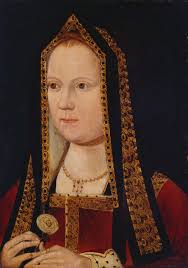
Eps 51: Biography Of Elizabeth Of York
— History
Elizabeth of York was born in 1466 as the eldest daughter of Edward IV and Elizabeth Woodville. Her early life was marked by political turbulence, including her father's brief loss of the throne and subsequent return. After her father's death, her uncle Richard III usurped the throne, leading to the mysterious disappearance of her brothers, the Princes in the Tower. Elizabeth then became a key figure in the plans to end the Wars of the Roses. In 1486, she married Henry Tudor, who became Henry VII after defeating Richard III at the Battle of Bosworth. This marriage united the warring houses of York and Lancaster, symbolized by the creation of the Tudor Rose. Elizabeth played a significant role in legitimizing Henry VII's reign and was known for her piety, loyalty, and the ability to navigate the complex politics of her time. She bore seven children, four of whom survived into adulthood, including the future Henry VIII. Elizabeth of York died in 1503, shortly after giving birth to her last child, and her legacy is remembered as stabilizing and unifying England during a time of great uncertainty.
| Seed data: | Link 1 |
|---|---|
| Host image: | StyleGAN neural net |
| Content creation: | GPT-3.5, |
Host

Crystal Barnes
Podcast Content
Elizabeth’s marriage to Henry VII symbolized the end of the Wars of the Roses, as she was from the House of York and he from the House of Lancaster. Together, they founded the Tudor dynasty. Their union produced several children, including Arthur, who was initially the Prince of Wales, and Henry, who would eventually ascend the throne as Henry VIII. Known for her beauty, grace, and piety, Elizabeth was a beloved queen consort. She was instrumental in stabilizing the monarchy during a period of uncertainty and played a subtle yet crucial role in the early Tudor court.
Elizabeth of York was known for her charitable works and devout religious life. She was involved in the care and upbringing of her children, ensuring a stable family environment, essential for the continuation of the Tudor lineage. Her influence in the royal court helped maintain peace and order, creating a balanced and supportive role alongside her husband, King Henry VII.
Tragedy struck in 1502 when her eldest son Arthur died suddenly. The loss was a devastating blow to both Elizabeth and Henry, throwing the succession into question. Despite this, Elizabeth remained a pillar of strength for her family. She continued to support Henry VII’s policies and efforts to secure the throne for their surviving children. However, her own health deteriorated, and she died on February 11, 1503, her 37th birthday, shortly after giving birth to a daughter who also did not survive.
Elizabeth of York’s legacy is profound, impacting the course of English history by uniting two feuding houses and giving birth to one of England's most famous kings. Her serene yet resolute presence solidified the Tudor line, and her life remains a fascinating chapter in the chronicles of British royalty. Her role as a queen consort set a precedent for the queens that followed, and her story is a testament to the crucial role women played in the fabric of political and royal life in medieval England.