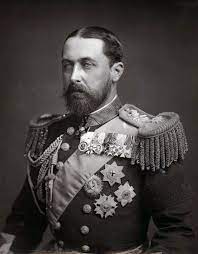
Eps 73: Biography Of Duke Alfred Of Saxe Coburg And Gotha
— History
Duke Alfred of Saxe-Coburg and Gotha was born in 1844 as the second son of Queen Victoria and Prince Albert. He initially joined the Royal Navy and had a successful military career, reaching the rank of Admiral. After his uncle's death in 1893, Alfred became the reigning Duke of Saxe-Coburg and Gotha. His rule faced many challenges, including political tensions and conflicts within the duchy. He married Grand Duchess Maria Alexandrovna of Russia, and they had several children, one of whom, Princess Marie, became Queen of Romania. However, his later life was marred by personal tragedies, including the suicide of his son, leading to a period of deep personal hardship. Duke Alfred died in 1900, and his death marked the end of his relatively brief and troubled reign.
| Seed data: | Link 1 |
|---|---|
| Host image: | StyleGAN neural net |
| Content creation: | GPT-3.5, |
Host

Randy Adams
Podcast Content
In 1863, Alfred became the Duke of Edinburgh, a title granted by his mother, which reinforced his standing within British nobility. His personal life intertwined with royal diplomacy; he married Grand Duchess Maria Alexandrovna of Russia in 1874, a union that solidified alliances within Europe’s ruling families. However, the marriage wasn’t without its challenges, marked by cultural differences and personal strains, yet it produced five children who would continue the family's influential legacy.
A significant turning point in his life came in 1893, when he became the Duke of Saxe-Coburg and Gotha following the death of his uncle Ernest II. This new role required him to relocate to Germany and immerse himself in the governance of a duchy with its own political complexities. Alfred's tenure as Duke was colored by the tensions of maintaining a balance between his British heritage and his duties in Germany, a balancing act made more precarious by the changing political landscape of the time.
Tragically, Duke Alfred’s life was marred by personal sorrow, most notably the suicide of his only son, Alfred, Hereditary Prince of Saxe-Coburg and Gotha, in 1899, which cast a long shadow over his later years. Struggling with declining health and the melancholia of his son’s demise, Alfred’s influence weakened until he passed away on July 30, 1900. His death marked the end of an era but left an indelible mark on European aristocracy. Duke Alfred’s legacy is a tapestry of naval excellence, strategic marital alliances, and the poignant human struggles behind royal responsibilities.