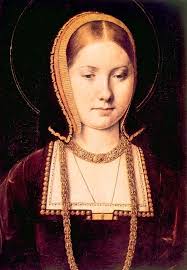
Eps 33: Biography Of Catherine Of Aragon
— History
Catherine of Aragon, born in 1485, was the daughter of the Spanish monarchs Ferdinand II of Aragon and Isabella I of Castile. She was initially married to Arthur, Prince of Wales, but he died shortly after their marriage. Catherine later married his brother, King Henry VIII of England. Her marriage to Henry was a central part of European diplomacy and strengthened the alliance between England and Spain. Despite their initial strong relationship, their marriage deteriorated, partly due to Catherine's inability to produce a male heir. This led to Henry seeking an annulment, resulting in England's break from the Catholic Church and the establishment of the Church of England. Catherine was known for her strong Catholic faith, intelligence, and dignity, even during her tumultuous later years. She died in 1536, leaving a legacy marked by both her personal resilience and the significant historical changes that her marriage and its dissolution precipitated.
| Seed data: | Link 1 |
|---|---|
| Host image: | StyleGAN neural net |
| Content creation: | GPT-3.5, |
Host

Jordan Morrison
Podcast Content
As Henry VIII's first wife, Catherine of Aragon played a significant role in English history, influencing political and religious landscapes. Despite their marriage lasting over two decades, producing several pregnancies but only one surviving child, a daughter named Mary, Catherine’s inability to produce a male heir became a point of contention. This failure to provide a male successor strained their marriage and became the catalyst for one of the most dramatic events in English history: Henry's decision to seek an annulment of their marriage. Pope Clement VII's refusal to annul the marriage led Henry to break away from the Roman Catholic Church, leading to the formation of the Church of England.
Catherine’s life post-annulment was marked by personal and political strife. She was demoted from Queen to Dowager Princess of Wales and isolated from her daughter, Mary. Despite these hardships, Catherine remained resolute in her claim as Henry's rightful wife and Queen, earning her admiration for her dignity and steadfastness. She became a symbol of devoutness and resilience, embodying the conflict between personal conviction and political expediency.
Catherine died on January 7, 1536, at Kimbolton Castle. Her legacy endures through her daughter, Mary I, who later became the first reigning queen of England and worked to restore Catholicism. Catherine’s life story is a poignant chapter in the annals of English history, showcasing the complex interplay of love, faith, and power in the Tudor era.