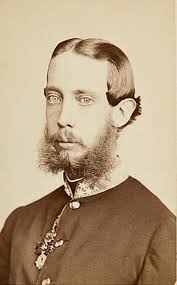
Eps 43: Biography Of Archduke Ludwig Viktor Of Austria
— History
Archduke Ludwig Viktor of Austria, born in 1842, was the youngest son of Archduke Franz Karl and Princess Sophie of Bavaria, making him a brother to Emperor Franz Joseph I and Emperor Maximilian I of Mexico. Known for his effeminate behavior and preference for the arts over military affairs, Ludwig Viktor's lifestyle often clashed with the conservative norms of his time. After causing several public scandals in Vienna, his family forced him into exile in Salzburg, where he lived out his days relatively removed from public scrutiny. Despite his seclusion, Ludwig Viktor remained a notable figure due to his lavish lifestyle and distinctive personality. He died in 1919, leaving behind a complex legacy intertwined with the Habsburg dynasty’s history.
| Seed data: | Link 1 |
|---|---|
| Host image: | StyleGAN neural net |
| Content creation: | GPT-3.5, |
Host

Elaine Jenkins
Podcast Content
Educated in the liberal arts and sciences, Ludwig Viktor was a patron of the arts and a known supporter of theater and music. He renovated and expanded the Schloss Klessheim palace, transforming it into a hub of culture and intellectual engagement. In addition to his interest in the arts, Ludwig Viktor was a passionate advocate for charity, contributing significantly to various social causes. However, his personal life was fraught with scandal; his openly homosexual lifestyle was a source of constant gossip and controversy in the rigidly conservative Habsburg society.
Ludwig Viktor's defiance of conventional norms led to several infamous incidents, including a public altercation in a Viennese bathhouse, which eventually forced his brother, Emperor Franz Joseph, to exile him to Klessheim. Despite his controversial life, Ludwig Viktor maintained a circle of loyal friends and continued to be an influential figure until his death on January 18, 1919. His legacy is a complex tapestry of defiance against imperial expectations and a commitment to cultural enrichment and philanthropy. Ludwig Viktor remains a fascinating study of the tension between personal freedom and societal expectations in the twilight years of the Austro-Hungarian Empire.