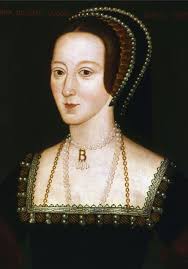
Eps 34: Biography Of Anne Boleyn
— History
Anne Boleyn was born into the influential Boleyn family and spent her early years in the Netherlands and France, gaining a cosmopolitan education. She returned to England and soon caught the eye of King Henry VIII. Despite initial resistance to his advances, they began a courtship that led to Henry seeking an annulment from his first wife, Catherine of Aragon. Anne's intelligence, charm, and ambition played a significant role in the religious and political upheaval that resulted in the English Reformation, as Henry broke from the Catholic Church to marry her. Anne was crowned queen in 1533 and gave birth to Elizabeth, the future queen. However, she failed to produce a male heir, which, coupled with court intrigues and false accusations of adultery and treason, led to her arrest and execution in 1536. Her legacy is marked by her daughter Elizabeth I and her significant impact on English history.
| Seed data: | Link 1 |
|---|---|
| Host image: | StyleGAN neural net |
| Content creation: | GPT-3.5, |
Host

Ken Chavez
Podcast Content
Refusing to become the King's mistress and insisting on marriage, Anne played a pivotal role in the annulment of Henry's marriage to Catherine—a process that led to England's break from the Roman Catholic Church and the establishment of the Church of England. Their marriage in 1533 was a triumphant moment for Anne, culminating in her coronation as queen. However, her reign was fraught with challenges. Her failure to produce a male heir and the birth of her daughter, Elizabeth, were sources of significant tension. Additionally, Anne's assertiveness and involvement in state affairs garnered her many enemies.
In 1536, Anne's fortunes dramatically reversed. Accused of adultery, incest, and high treason, charges likely orchestrated by her political adversaries and a disillusioned Henry, she was arrested and tried. Despite a lack of concrete evidence, Anne was found guilty and executed at the Tower of London on May 19, 1536. Her daughter, Elizabeth, would later ascend to the throne and become one of England's greatest monarchs, ensuring Anne's legacy endured. Anne Boleyn's story is a compelling tapestry of ambition, betrayal, and tragedy, reflecting the volatile nature of Tudor court politics and the indelible impact she left on English history.