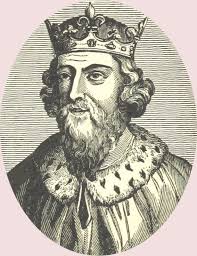
Eps 3: Biography Of Alfred The Great
— history
Alfred the Great was the King of Wessex from 871 to 899. He is renowned for his defense against Viking invasions and his efforts to consolidate the English kingdoms. Alfred is credited with significant military reforms, establishing a network of fortified towns known as burhs, and reorganizing the navy to better combat maritime threats. Beyond his military achievements, Alfred made notable contributions to education and legal reform. He promoted literacy and learning, translating important texts from Latin to Old English and encouraging education for both clergy and laypeople. His legal code sought to combine Mosaic law, Christian teachings, and traditional Germanic customs into a cohesive legal framework. Alfred's reign laid the foundation for a unified England, and he is remembered as a just and wise ruler who worked tirelessly to improve his kingdom. His legacy endures as one of the few English monarchs to be called "the Great".
| Seed data: | Link 1 |
|---|---|
| Host image: | StyleGAN neural net |
| Content creation: | GPT-3.5, |
Host

Randy Mitchelle
Podcast Content
He is renowned for his military acumen, exemplified during the Battle of Edington in 878 AD where he secured a decisive victory against the Danes, leading to the Treaty of Wedmore which established a boundary between the Saxons and Vikings. This victory was pivotal, not just militarily, but also for the cultural and spiritual impact it had, rallying the English people and fortifying their resolve.
What further distinguished Alfred was his unwavering dedication to learning and justice. Believing that wisdom was essential for sound rule and societal prosperity, he championed the revival of education, translating critical texts from Latin to Old English and instituting schools. His law code, a consolidation of existing laws interwoven with his own enlightened additions, underscored his determination to ensure justice prevailed throughout his kingdom.
In his twilight years, Alfred's efforts in administration and defense continued to bear fruit, laying the groundwork for a unified English nation. He established a network of fortified towns, or burhs, and a navy to ward off future Viking threats. Alfred the Great passed away in 899 AD, but his legacy endures, woven into the very fabric of English identity. His epithet "the Great" is well-earned, symbolizing both his immediate accomplishments and the aspirational tone he set for future generations.