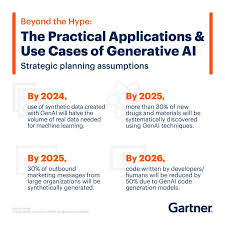
Eps 48: Beyond the Hype: Practical Applications of Generative AI
The podcast discusses the realistic uses of generative AI beyond the exaggerated expectations. It highlights various sectors where generative AI is making tangible contributions, such as in drug discovery, where AI models are helping to identify new compounds faster and more accurately. It also covers AI's role in content creation, like generating art and music, which, while impressive, are still primarily augmentative to human creators. The conversation touches on AI-driven design in engineering and architecture, optimizing and accelerating the design process. The speakers stress the importance of integrating generative AI tools within existing workflows to enhance productivity, rather than viewing them as standalone solutions. They urge listeners to focus on practical implementations that can deliver measurable value, encouraging a balanced approach to AI adoption that mitigates the risk of overreliance or misuse.
| Seed data: | Link 1 |
|---|---|
| Host image: | StyleGAN neural net |
| Content creation: | GPT-3.5, |
Host

Sophia Fletcher
Podcast Content
In the realm of creativity, generative AI is pushing the boundaries with AI-driven music composition, art creation, and design. Musicians and artists alike are leveraging these tools to explore new artistic territories, producing unique compositions and pieces that blend human creativity with machine learning's capacity to recognize and innovate on patterns. In architecture and urban planning, AI-generated designs are helping to optimize space utilization and aesthetic value, considering factors that might overwhelm human designers due to their sheer complexity.
Businesses are also reaping the benefits of generative AI in the customer service domain. Chatbots and virtual assistants driven by sophisticated language models are providing support that is not only more accurate but also available around the clock, increasing customer satisfaction and operational efficiency. In marketing, generative AI tools are creating personalized content and ad copy at scale, allowing for more targeted and effective marketing strategies.
The engineering sector is leveraging generative AI for product design and manufacturing. Engineers use these systems to explore a vast array of design possibilities, optimizing structures for weight, strength, and material use in ways that would be impossible to achieve manually. This is not just limited to physical products but extends to software development too, where AI can generate code snippets or even entire programs, enhancing productivity and innovation.
In financial services, generative AI models are employed to simulate market scenarios, assess risk, and even generate new trading strategies based on historical data, providing traders with advanced tools to make informed decisions. These applications are helping to create more resilient financial systems capable of adapting to rapid changes in the market environment.
The retail industry is benefiting from AI's ability to generate product recommendations and personalized shopping experiences by analyzing individual consumer preferences and behavior patterns. This leads to enhanced customer loyalty and increased sales. Additionally, inventory management systems powered by generative AI help retailers optimize stock levels, minimizing overstock and stockouts, and improving overall supply chain efficiency.
Lastly, the field of education is undergoing a transformation as well. AI-generated content and personalized learning pathways can accommodate the diverse pace and style of individual learners. This is enabling more effective and inclusive educational environments, where students receive tailored support that enhances their learning outcomes.
While the promise of generative AI is vast and varied, it is crucial to approach its adoption thoughtfully, considering ethical implications, bias, and transparency. By doing so, we can harness its potential to create practical, impactful solutions that go beyond the hype and bring real value across countless sectors.