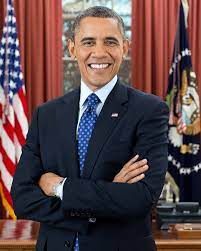
Eps 81: Barack Obama
The 10-minute podcast titled "Barack Obama" provides a summary of the life and career of former President Barack Obama. It begins by discussing his early life and upbringing in Hawaii, where he was raised by his mother and grandparents. Obama's interest in social justice and civil rights issues began to develop during his time in Chicago, where he worked as a community organizer before attending law school. The podcast then delves into Obama's rise in politics, starting with his successful campaign for the Illinois State Senate. His keynote address at the 2004 Democratic National Convention brought him national attention and laid the groundwork for his eventual presidential run. In 2008, Obama made history by becoming the first African American to be elected President of the United States. During his presidency, Obama faced numerous challenges, including the global financial crisis and the passage of the Affordable Care Act. The podcast highlights some of his major achievements, such as the economic stimulus package, the increase in renewable energy production, and the elimination of Osama bin Laden. Furthermore, the podcast explores Obama's approach to foreign policy, including his efforts to rebuild international alliances and negotiate the Iran nuclear deal. It also mentions some controversies and criticisms he faced, such as the Benghazi attack and criticism over the drone program. In conclusion, the podcast presents an overview of Barack Obama's life and presidency, emphasizing his trailblazing achievements as the first African American president of the United States, as well as his successes and challenges in office.
| Seed data: | Link 1 |
|---|---|
| Host image: | StyleGAN neural net |
| Content creation: | GPT-3.5, |
Host

Jane Nelson
Podcast Content
Obama's journey to the presidency was marked by an unwavering determination to bring about meaningful change. After graduating from Columbia University and Harvard Law School, he worked as a community organizer in Chicago, focusing on social justice issues and empowering marginalized communities. This experience taught him the power of grassroots movements and the need for inclusive leadership.
In 2004, Obama gained national attention for his keynote address at the Democratic National Convention, delivering a powerful message of hope, unity, and the potential for a brighter future. This captivating speech propelled him onto the national stage, leading to his election to the U.S. Senate later that year. As a senator, Obama worked on a range of issues, including ethics reform, healthcare, and immigration.
It was the 2008 presidential election that would define Obama's political legacy. Running on a platform of change and optimism, Obama captured the hearts and minds of Americans across the nation. His victory marked a historic milestone as the first African-American to be elected President of the United States. His presidency brought with it a renewed sense of hope for millions, particularly those who had felt marginalized or underrepresented in the past.
During his two terms in office, Obama faced numerous challenges, including a global financial crisis, the threat of terrorism, and deeply entrenched political divisions. However, he remained committed to his vision of progress and tirelessly worked to bring about transformative change. From signing the Affordable Care Act into law, expanding access to healthcare for millions, to promoting clean energy and tackling climate change – Obama's presidency was marked by landmark achievements.
Obama's leadership also extended to foreign policy, prioritizing diplomacy and multilateralism. He was a staunch advocate for nuclear disarmament and signed the New Strategic Arms Reduction Treaty with Russia, reducing the number of nuclear weapons in both countries. His administration also played a pivotal role in the Paris Agreement, an international effort to combat climate change.
Beyond his policy accomplishments, Obama's charisma, intelligence, and eloquence endeared him to the American people and the international community. He exuded grace and humility, always emphasizing the importance of listening to differing perspectives and finding common ground. Obama's ability to connect with people from all walks of life helped bridge divides and foster a sense of unity in a deeply polarized political landscape.
After leaving the White House in 2017, Obama has continued to be an influential figure in public life. He has published a memoir, "A Promised Land," offering insights into his presidency and reflections on the challenges and opportunities facing America. Through his foundation, the Obama Presidential Center, he seeks to inspire the next generation of leaders and promote social change.
Barack Obama's presidency was a testament to the power of hope and the ability of one individual to make a difference. His leadership was marked by integrity, compassion, and an unwavering belief in the capacity of the American people to shape a better future. As the first African-American president, he shattered barriers and paved the way for others to follow in his footsteps. Obama's legacy serves as a reminder that in times of uncertainty, we must never lose sight of our shared humanity and our capacity to create a more inclusive and just society.